


The 202V12304-5891 Fuel Line Transfer Pump Inlet is a precision-engineered fuel system component designed to provide a reliable, leak-free connection between the fuel supply line and the transfer pump on Howo/Sitrak truck parts diesel engine fuel delivery systems. This critical inlet fitting serves as the primary entry point for diesel fuel flowing from the chassis-mounted fuel tank through the primary fuel filter and into the mechanical or electric transfer pump that supplies the high-pressure common rail injection system. Manufactured from high-grade steel with a corrosion-resistant surface treatment, the inlet fitting features precision-machined threads, optimized internal flow geometry to minimize pressure drop, and a robust sealing interface that prevents fuel leakage and air ingress across the full operating range of the engine. The component is engineered to withstand the continuous vibration, thermal cycling, and chemical exposure characteristic of the heavy-duty diesel engine environment, ensuring reliable fuel delivery throughout the vehicle’s service life.
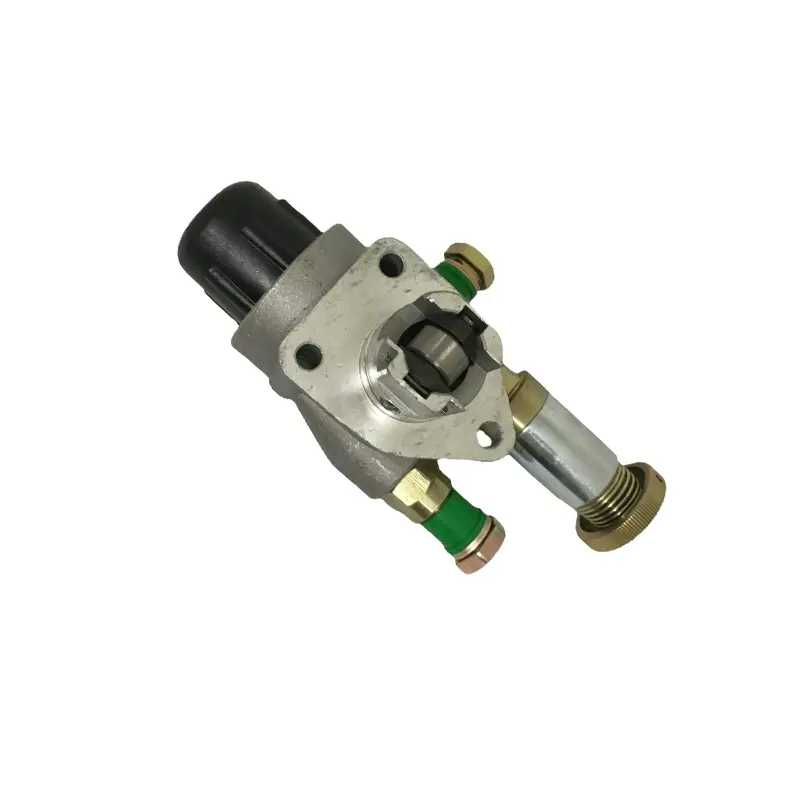
Fuel Line Transfer Pump Inlet

Входной патрубок топливного насоса перекачки

Entrada de la bomba de transferencia de línea de combustible
The internal flow geometry of the transfer pump inlet has been carefully optimized through computational fluid dynamics analysis to minimize flow restriction and pressure drop between the fuel supply line and the transfer pump inlet port. The inlet passage features a smooth, gradually expanding cross-section that transitions from the supply line diameter to the pump inlet port diameter without abrupt changes in flow area that could cause flow separation, cavitation, or excessive turbulence. The internal surface finish is controlled to a maximum roughness of Ra 3.2 microns, reducing frictional losses and preventing the accumulation of fuel contaminants that could restrict flow over time. The inlet incorporates a generous radius at the entry point to guide the fuel flow smoothly into the pump, minimizing entrance losses that can reduce pump volumetric efficiency. These flow optimization features are particularly important during cold-start conditions when diesel fuel viscosity is elevated and flow resistance is naturally higher, as well as during high-load operation when fuel flow rates are at their maximum and any restriction in the inlet path can limit engine power output.
The transfer pump inlet is manufactured from high-grade carbon steel selected for its excellent combination of machinability, mechanical strength, and fatigue resistance. The steel grade conforms to the material specifications established by the Howo powertrain engineering team, ensuring consistent material properties across all production batches. After machining, the inlet undergoes a multi-stage surface treatment process that includes degreasing, phosphating, and the application of a corrosion-resistant coating system specifically formulated for diesel fuel system components. The coating provides effective protection against the corrosive effects of diesel fuel, which can contain water, sulfur compounds, and organic acids that attack unprotected steel surfaces. The coating also provides protection against external corrosion from road spray, salt, and humidity in the underhood environment. The material and coating combination has been validated through extensive durability testing including thermal cycling, vibration exposure, and salt spray corrosion testing to ensure that the inlet maintains its structural integrity and sealing performance throughout the vehicle’s design life.
The sealing interface of the transfer pump inlet is engineered to prevent both fuel leakage outward and air ingress inward, both of which can have serious consequences for engine operation. Fuel leakage represents a fire hazard and an environmental concern, while air ingress into the fuel system can cause difficult starting, rough running, power loss, and in severe cases, complete engine shutdown. The inlet features a precision-machined sealing face with a surface finish of Ra 0.8 microns or better, providing an ideal mating surface for the copper or aluminum sealing washer that is installed between the inlet and the pump housing. The thread design incorporates a generous engagement length that develops the required clamping force to compress the sealing washer adequately without risk of thread stripping or galling. The inlet also features a hexagonal wrenching section that allows the application of the specified installation torque using a standard open-end or socket wrench, ensuring consistent and correct tightening in both production line and field service environments. The sealing system has been validated to maintain leak-tight performance across the full range of operating temperatures, pressures, and vibration conditions encountered in Howo and Sitrak diesel engine applications.
The transfer pump inlet operates in one of the most thermally and chemically demanding environments in the entire vehicle. The inlet is exposed to diesel fuel temperatures that can range from ambient winter conditions as low as -30°C to over 80°C during sustained high-load operation, particularly when fuel is recirculated from the hot high-pressure pump back to the tank through the fuel cooler. The inlet material and coating must maintain their mechanical properties and corrosion resistance across this entire temperature range without degradation. Chemical compatibility extends to the full range of commercially available diesel fuels, including ultra-low sulfur diesel (ULSD), biodiesel blends up to B20, and winterized diesel formulations containing anti-gel additives. The inlet must also resist the effects of any water that may be present in the fuel, as water can accelerate corrosion and, in cold conditions, freeze and cause mechanical damage through expansion. The material and coating system selected for this inlet have been validated through immersion testing in representative diesel fuel formulations at elevated temperatures, with no evidence of softening, swelling, blistering, or loss of adhesion.
| Parameter | Specification | Standard |
|---|---|---|
| OEM Part Number | 202V12304-5891 | Howo Internal |
| Product Type | Fuel Line Transfer Pump Inlet | — |
| Body Material | High-Grade Carbon Steel | DIN EN 10277 |
| Surface Treatment | Phosphate + Corrosion-Resistant Coating | Howo Specification |
| Thread Specification | Metric Fine Thread (application-specific) | ISO 261 |
| Sealing Interface | Flat Face with Copper/Aluminum Sealing Washer | — |
| Internal Surface Finish | Ra ≤ 3.2 μm | ISO 4287 |
| Sealing Face Finish | Ra ≤ 0.8 μm | ISO 4287 |
| Operating Temperature | -30°C to +80°C (fuel temperature), -40°C to +120°C (ambient) | — |
| Maximum Operating Pressure | 1.5 bar (inlet side, suction), 10 bar (burst) | — |
| Fuel Compatibility | ULSD, B5-B20 Biodiesel Blends, Winter Diesel | EN 590, ASTM D975 |
| Wrench Size | Application-specific hex | — |
| Installation Torque | Per vehicle service manual specification | — |
| Vehicle Compatibility | Howo A7, Howo T7H, Howo MAX, Sitrak C7H, Sitrak G7 | — |
Critical Component for Fuel System Integrity: The transfer pump inlet is a safety-critical component whose failure can have immediate and severe consequences. A fuel leak at the inlet connection creates a fire hazard in the engine compartment, where hot surfaces such as the exhaust manifold and turbocharger can easily ignite diesel fuel spray. Air ingress through a compromised inlet seal can cause the engine to lose prime, resulting in difficult or impossible starting, particularly after the vehicle has been parked overnight. The genuine OEM inlet is manufactured to the exact specifications validated by the Howo engineering team, ensuring that the thread fit, sealing face geometry, and material properties are all optimized for the specific transfer pump and fuel system configuration. The use of genuine OEM components eliminates the risk of dimensional incompatibility, material mismatch, or surface finish deviation that can compromise the sealing integrity of aftermarket alternatives.
Engineered for the Howo Common Rail Fuel System Architecture: The modern common rail diesel injection system used in Howo and Sitrak engines operates with extremely tight tolerances and requires precise fuel delivery conditions to function correctly. The transfer pump inlet is an integral part of this precision fuel delivery chain, and its design has been optimized to work in harmony with the other components of the system. The inlet diameter, internal flow path geometry, and sealing interface are all specifically matched to the characteristics of the Howo transfer pump, fuel filter, and fuel supply line. The inlet is designed to maintain fuel flow under all operating conditions including hot fuel handling, cold start, and high-altitude operation where reduced atmospheric pressure increases the tendency for cavitation and vapor lock. This system-level optimization ensures that the fuel delivery system operates at its designed efficiency and reliability, providing the correct fuel supply pressure and flow rate to the high-pressure pump under all engine operating conditions.
Validated Durability Through Rigorous Testing: The transfer pump inlet has been subjected to an extensive validation program that simulates the most demanding conditions the component will encounter in service. This includes thermal cycling tests where the inlet is repeatedly cycled between -40°C and +120°C while pressurized with diesel fuel, vibration testing on an electrodynamic shaker that reproduces the measured vibration spectrum from instrumented vehicles operating on rough roads, pressure pulsation testing that simulates the pressure fluctuations generated by the transfer pump, and salt spray corrosion testing that verifies the effectiveness of the surface treatment. The inlet has also been validated through vehicle-level durability testing where instrumented trucks are operated for hundreds of thousands of kilometers on a combination of test tracks and public roads, representing the full range of operating conditions from highway cruising to severe off-road operation. This comprehensive validation provides confidence that the inlet will perform reliably throughout the vehicle’s intended service life.
Protection Against Common Field Failure Modes: Field experience with fuel system components has identified several common failure modes that the genuine OEM inlet is specifically designed to prevent. Thread galling and seizure, which can make removal difficult or impossible without damaging the pump housing, is prevented through the use of appropriate thread lubricant or coating applied during manufacturing. Corrosion of the sealing face, which can create leak paths between the inlet and the pump housing, is prevented by the multi-layer surface treatment system. Fatigue cracking at stress concentration points, which can develop after prolonged vibration exposure, is prevented by the generous fillet radii and smooth surface finish incorporated into the inlet design. Fuel contamination-induced wear of the internal flow passage is minimized by the smooth internal surface finish that resists the accumulation of abrasive particles. By addressing these known failure modes in the design and manufacturing process, the genuine OEM inlet provides a level of reliability and durability that is difficult to match with generic or aftermarket alternatives.
Proper installation of the transfer pump inlet is essential to ensure leak-free operation and prevent damage to the pump housing or inlet threads. Before installation, thoroughly clean the sealing face on the pump housing to remove any old sealing washer material, corrosion, or contamination. Inspect the pump housing threads for damage, and clean them with a thread chaser if necessary to remove any debris or corrosion that could cause cross-threading or improper torque. Always use a new sealing washer of the correct material and size, as specified in the vehicle service manual. Copper washers are typically used for their excellent conformability and corrosion resistance, while aluminum washers may be specified for certain applications. Install the sealing washer onto the inlet fitting, then thread the inlet into the pump housing by hand to ensure proper thread engagement and avoid cross-threading. Tighten the inlet to the specified torque using a calibrated torque wrench. Do not over-tighten, as excessive torque can distort the sealing washer, damage the sealing faces, or strip the threads in the pump housing. After installation, pressurize the fuel system and inspect the inlet connection for any signs of fuel leakage before returning the vehicle to service.
The transfer pump inlet should be inspected as part of the vehicle’s regular preventative maintenance schedule, particularly during fuel filter replacement intervals when the technician has access to the fuel system components. During inspection, check for signs of fuel leakage around the inlet connection, indicated by fuel staining, wetness, or the accumulation of dirt and debris on fuel-wetted surfaces. Inspect the inlet body for signs of corrosion, particularly at the junction between the hexagonal wrenching section and the threaded portion, where stress concentrations can combine with corrosion to initiate cracking. Check the security of the connected fuel line, ensuring that the line fitting is tight and that the line is properly supported to prevent vibration-induced fatigue at the inlet connection. If the inlet is removed for any reason, always replace the sealing washer with a new one and inspect the sealing faces on both the inlet and the pump housing for damage. Any inlet showing signs of thread damage, corrosion pitting, or mechanical deformation should be replaced immediately to prevent in-service failure. The small cost of a replacement inlet is negligible compared to the potential cost of an engine compartment fire or a roadside breakdown caused by fuel system failure.
The transfer pump inlet is designed for use with the diesel engines fitted to Howo and Sitrak heavy-duty truck models, including the widely used Weichai WP10, WP12, and WP13 engine families, as well as the MAN-derived MC11 and MC13 engine series that power the Sitrak C7H and G7 models. The inlet is compatible with both mechanical transfer pump configurations found on earlier engine models and the electric transfer pump setups used on later common rail systems. The specific engine application is determined by the transfer pump model and the fuel system configuration, and the inlet part number should be verified against the vehicle’s engine serial number and parts catalog to ensure correct fitment. The inlet is designed to work with the standard fuel supply line diameters and fitting types used across the Howo and Sitrak product range, making it a versatile component that serves multiple engine and vehicle configurations.
Several symptoms can indicate a problem with the transfer pump inlet seal or the inlet itself. The most obvious and serious symptom is visible diesel fuel leakage around the inlet connection, which may appear as wetness, staining, or dripping fuel. Another common symptom is difficulty starting the engine, particularly after the vehicle has been sitting for several hours or overnight, which can indicate air ingress through a compromised inlet seal that allows the fuel system to lose its prime. The engine may also exhibit rough idling, hesitation during acceleration, or loss of power at high engine speeds if the inlet is partially restricted by debris or if an air leak is causing inconsistent fuel delivery. In some cases, a whistling or sucking sound may be audible from the inlet area, indicating air being drawn into the fuel system through a leak path. If any of these symptoms are present, the fuel system should be inspected immediately, with particular attention to the inlet connection and sealing washer condition. Prompt diagnosis and repair of fuel system leaks is essential for both safety and engine reliability.
The use of thread sealant on the transfer pump inlet threads is generally not recommended and should only be done if specifically instructed by the vehicle service manual. The primary sealing mechanism for the inlet is the compression of the sealing washer between the inlet flange and the pump housing sealing face, not the threads themselves. The threads serve only to generate the clamping force that compresses the washer, and applying sealant to the threads can interfere with the accurate torque measurement and may introduce sealant fragments into the fuel system that can clog filters, injectors, or other precision components. If thread sealant is specified by the manufacturer, use only the specific product and application method described in the service literature. For most applications, the correct installation procedure is to install a new, dry sealing washer, thread the inlet in by hand, and tighten to the specified torque without any additional sealant. If a leak persists after correct installation with a new sealing washer, the problem is likely with the sealing faces or the inlet itself rather than the threads, and further diagnosis is required rather than the application of sealant as a temporary fix.
The transfer pump inlet is positioned in the fuel system between the primary fuel filter and the transfer pump, making it a critical link in the fuel conditioning chain. Diesel fuel flows from the tank through the fuel supply line to the primary fuel filter, where water and particulate contaminants are removed. From the filter outlet, the cleaned fuel passes through the transfer pump inlet into the transfer pump, which then delivers it at the required pressure and flow rate to the high-pressure common rail pump. The integrity of the inlet seal is particularly important because any air leak at this point in the system completely bypasses the fuel filter’s water separation function. If air enters the fuel through a leaking inlet, it can carry moisture that condenses in the fuel system, potentially causing corrosion, microbial growth, and injector damage. This is why the inlet sealing system is designed to prevent both outward fuel leakage and inward air ingress, and why the use of genuine OEM components with validated sealing performance is so important for maintaining the overall health and reliability of the fuel system.
The Fuel Line Transfer Pump Inlet is a component whose importance to engine reliability and vehicle safety is far greater than its modest size and cost would suggest. As the critical interface between the fuel supply system and the transfer pump, this inlet fitting must perform flawlessly under the combined stresses of vibration, thermal cycling, chemical exposure, and pressure pulsation for hundreds of thousands of kilometers. The 202V12304-5891 inlet, with its optimized flow geometry, robust steel construction, corrosion-resistant coating, and precision sealing interface, represents the culmination of decades of fuel system engineering experience at Howo and its technology partners. Every aspect of the inlet’s design and manufacturing has been validated through rigorous testing to ensure reliable performance in the demanding conditions of global heavy-duty truck operation. For fleet operators and maintenance professionals, the choice of a genuine OEM inlet is a small but essential investment in the safety, reliability, and longevity of the vehicle’s fuel delivery system.


