


The 200V05840-0129 Oil Pan Bracket is an essential structural component in the engine oil pan mounting system for Howo/Sitrak truck parts heavy-duty commercial vehicles. This individual bracket serves as a load-distribution element that bridges the gap between the concentrated clamping force of individual mounting bolts and the need for uniform compression across the oil pan gasket sealing surface. Positioned along the longitudinal side rail of the oil pan, the bracket spans multiple bolt positions to create a continuous line of clamping force that prevents the gasket extrusion, uneven compression, and progressive oil leakage that can result from bolting the oil pan directly to the engine block. The bracket is manufactured from high-strength steel using precision cold-forming processes that create the specific channel profile, bolt hole pattern, and edge geometry required for its designated mounting position. The 200V05840-0129 bracket is engineered to function as part of a coordinated mounting system — its stiffness, bolt spacing, and flange width are designed to work in concert with the other brackets in the system to create a uniform gasket compression profile around the entire perimeter of the oil pan. The bracket’s mounting holes are precisely located to match the engine block drilling pattern, with controlled clearances that allow the bracket to self-align during installation while maintaining accurate bolt positioning. The component receives a multi-layer corrosion protection system consisting of zinc-nickel alloy electroplating, trivalent chromium passivation, and a silicate sealer, providing durable protection against the aggressive chemical, thermal, and environmental conditions of the heavy-duty diesel engine compartment. When properly installed and torqued to specification, the bracket provides reliable, maintenance-free service for the full operational life of the engine.
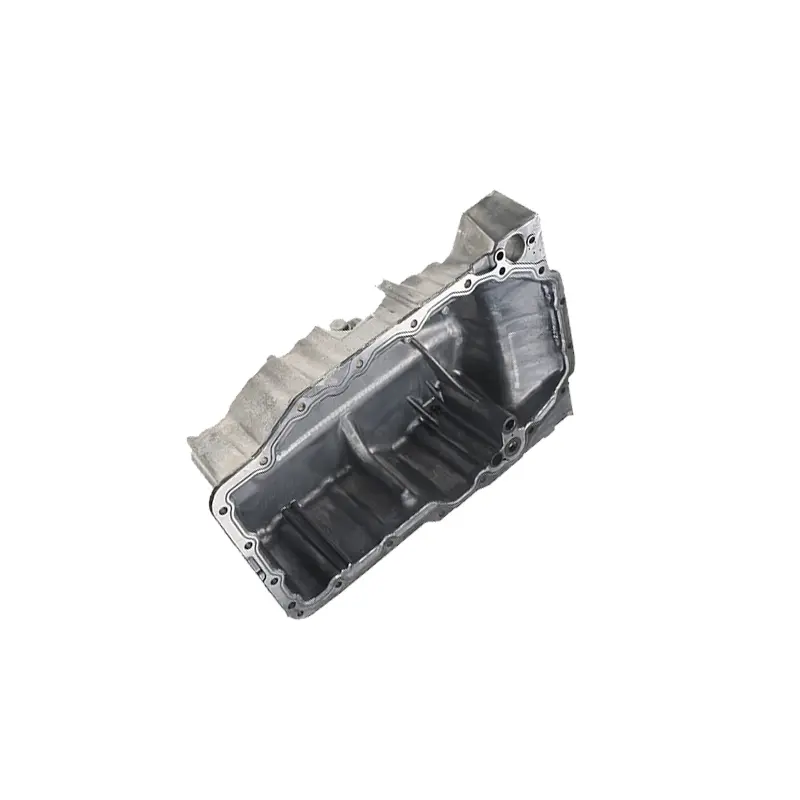
Oil Pan Bracket
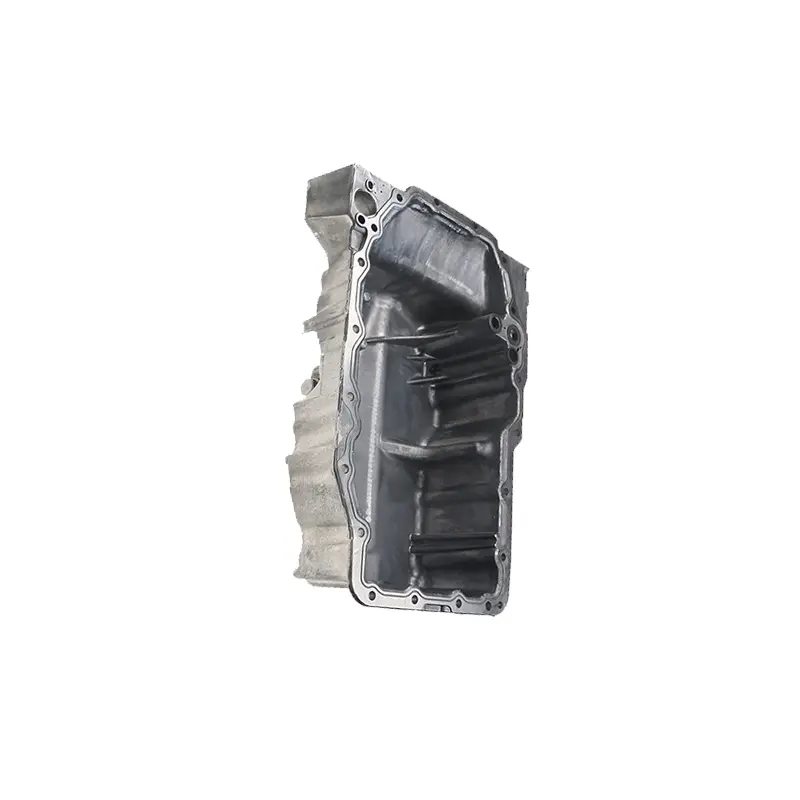
Кронштейн масляного поддона
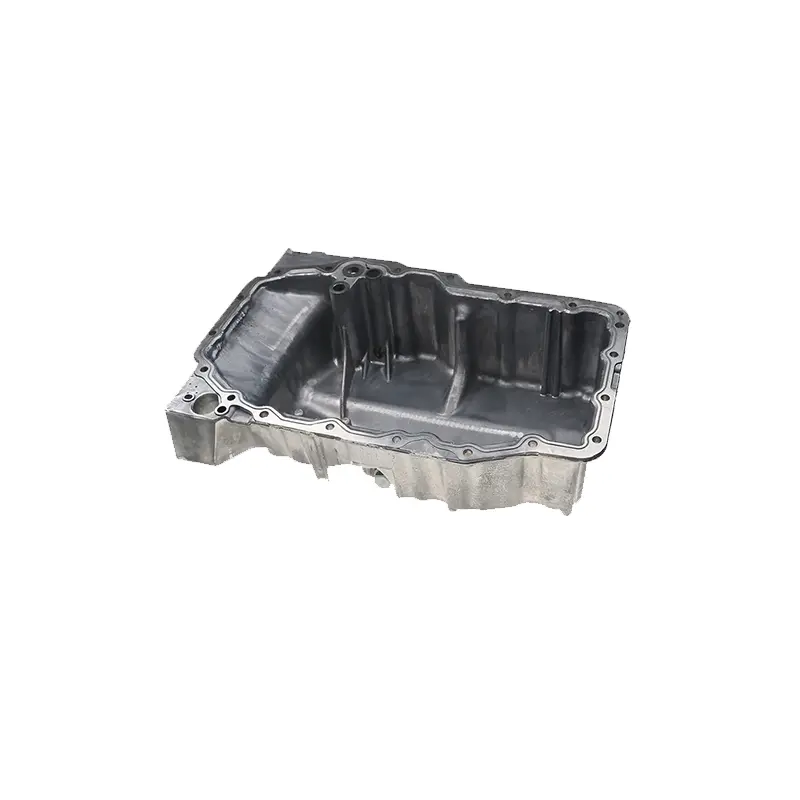
Soporte del cárter de aceite
The 200V05840-0129 bracket does not function in isolation — it is part of a coordinated system of brackets that together create a uniform clamping force distribution around the entire oil pan perimeter. The engineering design of this system considers the interactions between adjacent brackets, the stiffness of the oil pan flange, the compressibility of the gasket material, and the rigidity of the engine block casting. The bracket’s stiffness is tuned to match the stiffness of the adjacent brackets, ensuring that the transition from one bracket to the next occurs without a step change in gasket compression. At the ends of the bracket, where it meets the transverse bracket, the flange geometry is designed to overlap slightly, creating a continuous clamping line with no gaps where the gasket could extrude. The bolt spacing of 60mm was determined through finite element analysis to be the optimal distance for the bracket’s stiffness — closer spacing would add unnecessary bolts and increase installation time, while wider spacing would create zones of low gasket compression between bolts that could lead to leakage. The bracket’s formed channel profile provides a section modulus that is sufficient to limit deflection between bolt positions to less than 0.05mm at the full 25 Nm bolt torque, ensuring that the gasket compression does not vary by more than 5 percent between the bolt positions and the mid-span points. This system-level engineering approach ensures that the oil pan seal is maintained under all operating conditions, from cold-start to maximum rated power, and from level highway cruising to severe off-road articulation.
The 200V05840-0129 bracket plays a critical role in controlling the compression of the oil pan gasket, which is essential for achieving a reliable, long-lasting seal. The gasket used in Sinotruk MC-series engines is typically a multi-layer steel (MLS) design with elastomer sealing beads that require a specific compression range — typically 20 to 30 percent of the bead height — to create an effective seal. Compression below this range results in insufficient sealing pressure, while compression above this range can crush the elastomer beads, causing permanent deformation that prevents the gasket from recovering if the bolts are loosened for future service. The bracket’s load-distribution function ensures that the gasket compression falls within this optimal range at every point along the sealing surface. Without the bracket, the gasket compression at the bolt locations would exceed the optimal range (potentially crushing the elastomer beads), while the compression between bolts would fall below the optimal range (potentially allowing oil seepage). The bracket’s flat contact surface provides a uniform bearing area for the gasket, eliminating the point-loading that would occur if the bolt heads were tightened directly against the oil pan flange. The bracket’s surface finish, controlled to Ra 1.6 to 3.2 micrometers, provides sufficient friction to prevent the gasket from extruding or shifting under compression while being smooth enough to avoid cutting or abrading the gasket surface. The bracket’s formed channel also provides a degree of thermal isolation between the bolt heads and the gasket, reducing the peak temperature experienced by the gasket material and helping to maintain its elastomeric properties over extended service. This comprehensive approach to gasket compression control is a key factor in the oil pan’s ability to maintain a leak-free seal for hundreds of thousands of kilometers in demanding commercial vehicle service.
The 200V05840-0129 bracket must maintain its clamping force and gasket compression under the dynamic loading conditions encountered during vehicle operation. The engine’s combustion events create pressure pulses within the crankcase that act on the internal surface of the oil pan, generating cyclic loading on the mounting system. Road-induced vibration is transmitted through the chassis and engine mounts to the oil pan, creating high-frequency oscillatory loads. The vehicle’s acceleration, braking, and cornering maneuvers create inertial loads on the oil mass within the sump, which are transmitted to the oil pan walls and, ultimately, to the mounting brackets. The bracket’s design addresses these dynamic loads through several features. The formed channel profile provides bending stiffness that resists the oscillatory loads without excessive deflection, maintaining consistent gasket compression. The bolt hole clearances are sized to prevent the bracket from shifting under dynamic loads while allowing the slight movements necessary to accommodate thermal expansion. The bracket’s mass and stiffness are tuned to avoid resonance with the known vibration frequencies of the engine — the bracket’s natural frequency is above 500 Hz, well outside the range of the engine’s primary and secondary vibration orders (typically 20 to 200 Hz for a six-cylinder diesel engine operating at 600 to 2,100 RPM). The bolt torque specification of 25 Nm provides sufficient clamp load to prevent joint separation under the maximum anticipated dynamic load, with a safety factor of approximately 2.5 against the calculated peak separating force. The bracket’s material properties — high yield strength and excellent fatigue resistance — ensure that the bracket can withstand the millions of load cycles encountered during the engine’s service life without yielding, cracking, or experiencing a reduction in clamping force due to material relaxation.
The 200V05840-0129 bracket is designed for seamless integration into the vehicle manufacturer’s service parts system, with features that support accurate identification, ordering, and installation. The bracket is stamped with the complete part number at a visible location, allowing technicians to verify the correct component without relying on packaging labels that may have been discarded. The part number is also printed on the individual packaging, along with a barcode that can be scanned for inventory management and warranty tracking purposes. The bracket is shipped with a light coating of corrosion-preventive oil that protects the zinc-nickel finish during storage and transit — this oil should be removed with a solvent wipe before installation to ensure proper bolt torque and gasket adhesion. The packaging includes a simple pictogram that shows the bracket orientation relative to the engine, reducing the risk of incorrect installation. The bracket’s bolt hole pattern is asymmetrical in a way that prevents incorrect orientation — the bracket can only be installed in the correct orientation, as the bolt holes will not align with the engine block threads if the bracket is reversed. This poka-yoke (error-proofing) design feature is a valuable addition that reduces the probability of installation errors in busy workshop environments. The bracket is compatible with all standard M8 x 1.25 flange-head bolts used in the Sinotruk engine series, and the bolt hole clearance is designed to work with the standard bolt diameter tolerance. The bracket’s weight and dimensions are documented in the vehicle manufacturer’s parts catalog, allowing accurate shipping cost calculation and warehouse space planning for fleet maintenance operations that stock spare parts.
| Specification | Detail |
|---|---|
| OEM Part Number | 200V05840-0129 |
| Product Type | Oil Pan Mounting Bracket (Individual) |
| Mounting Position | Longitudinal (Side Rail) |
| Material Grade | HSLA Steel, 3mm Thickness |
| Minimum Yield Strength | 350 MPa |
| Bolt Hole Quantity | 3 Positions |
| Bolt Thread Specification | M8 x 1.25 (Class 10.9 Bolts) |
| Bolt Torque | 25 Nm (3-Stage Progressive) |
| Mid-Span Deflection | ≤ 0.05mm at 25 Nm Bolt Torque |
| Natural Frequency | Above 500 Hz |
| Surface Treatment | Zinc-Nickel + Trivalent Passivation + Silicate Sealer |
| Corrosion Resistance | 720 Hours Salt Spray (ISO 9227) |
| Temperature Range | -40°C to +200°C |
| Engine Compatibility | Sinotruk MC11 / MC13 |
| Weight | Approximately 0.45 kg |
The 200V05840-0129 bracket is not designed as a standalone component — it is engineered to function as part of a coordinated mounting system where each bracket’s stiffness, bolt spacing, and flange geometry complement the adjacent brackets. This system-level engineering ensures that the transition from one bracket to the next is seamless, with no discontinuities in gasket compression that could create leak paths. When a bracket is replaced with an aftermarket component that has different stiffness characteristics, the system-level balance is disrupted — an aftermarket bracket that is stiffer than the OEM component will create a localized high-pressure zone in the gasket, while an aftermarket bracket that is more flexible will create a low-pressure zone. In either case, the uniformity of the gasket compression is compromised, increasing the risk of oil leakage. The OEM bracket’s stiffness is verified during production to ensure that it falls within the specified tolerance band, maintaining the system-level performance that the engine was designed to achieve. This is particularly important when only one bracket is being replaced — the new bracket must match the stiffness of the remaining original brackets to maintain the uniform compression profile. The OEM bracket’s consistent stiffness, verified through the production quality control process, ensures that the replacement bracket integrates seamlessly with the existing mounting system, restoring the oil pan seal to its original factory specification.
For fleet maintenance operations, the 200V05840-0129 bracket contributes to maintenance efficiency through its consistent quality, reliable fitment, and ease of identification. The bracket’s poka-yoke design prevents incorrect orientation during installation, reducing the probability of installation errors that could lead to oil leaks and the need for rework. The stamped part number allows quick visual verification during the parts receiving process and at the point of installation, reducing the risk of using an incorrect bracket. The bracket’s consistent dimensional accuracy ensures that it fits correctly on every vehicle of the specified configuration, eliminating the time-consuming adjustments that can be required with aftermarket brackets that have dimensional variations. The bracket’s corrosion protection eliminates the need for additional anti-corrosion treatment before installation, saving preparation time. The bracket’s compatibility with standard M8 x 1.25 bolts means that the original bolts can be reused if they are in good condition, or standard replacement bolts can be sourced if needed. The bracket’s installation procedure is straightforward and well-documented in the vehicle service manual, allowing technicians to perform the installation efficiently without specialized training or tools. For large fleets where maintenance throughput is a key performance metric, the efficiency gains from using OEM-quality components that fit correctly and install quickly contribute to reduced vehicle downtime and lower maintenance costs per vehicle. The bracket’s reliable performance also reduces the frequency of unscheduled maintenance events caused by oil leaks, further improving fleet operational availability.
Using the correct 200V05840-0129 OEM bracket provides important warranty and liability protection for vehicle owners, fleet operators, and repair facilities. When an engine failure occurs that is related to oil loss from a leaking oil pan gasket, the vehicle manufacturer’s warranty assessment will examine whether OEM-specification parts were used in the repair. If aftermarket brackets were installed, the manufacturer may determine that the aftermarket components contributed to the failure and deny warranty coverage for the resulting engine damage. This is not a theoretical concern — engine failures from oil starvation can cost tens of thousands of dollars to repair, and warranty coverage is often the deciding factor in whether the vehicle owner or the repair facility bears this cost. For repair facilities, the use of OEM parts provides a defense against liability claims arising from repair-related failures. If a customer’s engine is damaged due to an oil leak after a repair, the facility can demonstrate that OEM-specification parts were used and installed according to the manufacturer’s procedures, shifting the focus of the investigation to other potential causes. If aftermarket parts were used, the facility may face the difficult task of proving that the aftermarket components were not the cause of the failure. For fleet operators who self-insure or who have contractual maintenance agreements with third-party service providers, the use of OEM parts is often a condition of the maintenance contract or insurance policy. The modest additional cost of the OEM bracket compared to an aftermarket alternative is a small price to pay for the warranty and liability protection it provides.
The 200V05840-0129 bracket contributes to environmental compliance by preventing the oil leaks that can result in soil and water contamination. A single heavy-duty diesel engine can contain 34 to 42 liters of engine oil, and even a slow leak that loses only a few milliliters per kilometer can release significant quantities of oil into the environment over the vehicle’s service life. Oil that leaks onto road surfaces is washed into storm drains and eventually into waterways, where it harms aquatic ecosystems. Oil that leaks onto soil at construction sites, mines, or parking areas can contaminate groundwater and require expensive remediation. Many jurisdictions have regulations that require vehicles to be free of fluid leaks, and vehicles that leave oil spots in parking areas or on job sites can be subject to fines or exclusion from the site. The bracket’s role in maintaining a leak-free oil pan seal is therefore not just a matter of engine protection — it is also a matter of environmental stewardship and regulatory compliance. The bracket’s corrosion protection ensures that it maintains its clamping force and gasket compression throughout the vehicle’s service life, preventing the age-related leaks that can develop as brackets corrode and lose their structural integrity. The bracket’s thermal expansion accommodation prevents the gasket damage that can occur as the engine ages and the gasket material loses some of its resilience. By investing in the correct OEM bracket at the time of repair, vehicle owners and fleet operators are also investing in environmental protection and regulatory compliance, reducing their environmental footprint and avoiding the costs and reputational damage associated with environmental violations.
The installation of the 200V05840-0129 bracket follows a systematic procedure that ensures correct positioning and proper torque. Step 1: Verify the part number stamped on the bracket against the vehicle service manual to confirm the correct bracket for the position. Step 2: Clean the bracket with a solvent wipe to remove the protective oil coating, and inspect for any shipping damage. Step 3: Ensure the oil pan gasket is correctly positioned on the engine block or oil pan flange. Step 4: Place the oil pan against the engine block and position the bracket over the oil pan flange, with the contour matching the flange profile. The bracket should seat naturally without forcing. Step 5: Install the bolts through the bracket, oil pan flange, and gasket, threading each bolt finger-tight. Do not tighten any bolt at this stage. Step 6: Tighten the bolts in a three-stage progressive sequence: first stage to 10 Nm, second stage to 18 Nm, final stage to 25 Nm. The tightening sequence starts from the center bolt and works outward toward the ends. Step 7: Visually inspect the bracket-to-flange gap — it should be uniform from end to end. Step 8: After the engine has been run for one complete heat cycle, recheck the bolt torque. The total installation time for a single bracket on an engine that is already accessible (oil pan removed) is approximately 5 to 10 minutes, including the time for cleaning and inspection.
The inspection of the 200V05840-0129 bracket should be integrated into the vehicle’s preventive maintenance schedule, typically as part of the engine oil change service. The inspection requires only a few minutes and can be performed while the oil is draining. Use a flashlight to inspect the bracket from underneath the vehicle — look for any signs of oil seepage at the gasket line adjacent to the bracket, any visible deformation or damage to the bracket, and any corrosion on the bracket surface. Check the bolt heads for signs of loosening — a clean ring around a bolt head that differs from the dirt accumulation pattern on adjacent bolts may indicate that the bolt has moved. If the bracket appears to be in good condition with no signs of leakage, deformation, or corrosion, no further action is required — the bracket is designed to provide maintenance-free service for the life of the oil pan installation. If any concerns are identified during the inspection, document them in the vehicle maintenance record and schedule a follow-up inspection at the next oil change to monitor for progression. If the concern has progressed — for example, if a small oil seep has become a visible drip, or if surface corrosion has progressed to pitting — the bracket should be replaced at the next convenient service opportunity. The preventive maintenance inspection is also an opportunity to verify that all brackets are present — a missing bracket is a serious concern that should be addressed immediately, as the oil pan is not adequately supported without the full complement of brackets. The inspection findings should be documented in the vehicle maintenance record, providing a historical record of the bracket’s condition that can be valuable for trend analysis, warranty claims, and vehicle resale value documentation.
How do I know if the 200V05840-0129 bracket is the correct one for my vehicle?
The definitive method for confirming the correct bracket for your vehicle is to consult the electronic parts catalog (EPC) using the vehicle’s VIN. The VIN contains information about the vehicle’s engine configuration, manufacturing date, and option codes that determine the specific parts required. Enter the VIN into the EPC system and navigate to the engine oil pan section — the exploded-view diagram will show each bracket in its correct position with the corresponding part number. Compare the part number in the catalog to the number stamped on the bracket to confirm the match. If you do not have access to the EPC system, the vehicle service manual also includes a parts identification section that lists the bracket part numbers by engine configuration. The bracket itself is stamped with the part number near one end — verify this number before installation. As a general guide, the 200V05840-0129 bracket is a longitudinal (side rail) bracket for Sinotruk MC11 and MC13 engines. It is one of two or four longitudinal brackets used on the engine, depending on whether the oil pan has two long side rails or four shorter side rail sections. The bracket is not interchangeable with the transverse (front/rear) brackets, which have different part numbers and different geometries. If you are replacing a bracket that was lost or damaged, and you cannot identify the original part number, the EPC is the most reliable source of correct part identification. Ordering the wrong bracket will result in a component that does not fit correctly, potentially causing oil leaks and the need for a repeat repair.
What happens if the 200V05840-0129 bracket is installed without the proper torque sequence?
Installing the bracket without following the proper torque sequence can result in uneven gasket compression, reduced clamping force, and an increased risk of oil leakage. The three-stage progressive torque sequence (10 Nm, 18 Nm, 25 Nm) is designed to draw the bracket down evenly and compress the gasket uniformly. If the bolts are tightened to full torque in a single step, the bracket may not seat evenly — the first bolt tightened will pull the bracket down at that point, potentially lifting the opposite end of the bracket away from the oil pan flange. This creates a gap at the lifted end that may not close completely when the remaining bolts are tightened, resulting in uneven gasket compression. If the bolts are tightened out of sequence (for example, tightening one end bolt first instead of the center bolt), the bracket can pivot around the tightened bolt, creating a wedge-shaped gap at the opposite end. The center-first tightening sequence prevents this by establishing the bracket’s position at its midpoint before the ends are secured. If the bolts are undertightened, the gasket compression will be insufficient to create a reliable seal, and the bolts may loosen over time due to vibration. If the bolts are overtightened, the bracket may deform, the bolt threads may yield, or the gasket may be over-compressed — all conditions that can lead to oil leakage. The torque specification of 25 Nm has been determined through engineering analysis and validation testing to provide the optimal clamp load for the bracket, gasket, and bolt combination. Deviating from this specification, either in the torque value or the tightening sequence, compromises the reliability of the oil pan seal.
Can the 200V05840-0129 bracket be welded or repaired if it cracks?
Welding or repairing a cracked 200V05840-0129 bracket is not recommended and is not considered an acceptable repair practice. The bracket is a precision-formed component with specific stiffness characteristics that are essential for its load-distribution function. Welding introduces several problems: the heat from welding alters the microstructure of the steel in the heat-affected zone, creating a localized area of different hardness, strength, and ductility that can become a fatigue crack initiation site. The weld metal itself has different metallurgical properties than the base metal, and the transition from the weld to the base metal is a stress concentration point. The bracket’s zinc-nickel coating is destroyed by the welding heat, leaving the repaired area unprotected against corrosion. The welding process can also distort the bracket, changing its geometry and compromising its ability to seat evenly against the oil pan flange. The bracket’s thickness of 3mm makes it difficult to weld without burning through, especially if the welding is performed with the bracket in position on the vehicle where access and visibility are limited. The cost of a new 200V05840-0129 bracket is a small fraction of the cost of the potential engine damage that could result from a bracket failure after an attempted repair. If a bracket is found to be cracked, it should be replaced with a new OEM component. The root cause of the cracking should be investigated — common causes include impact damage, overtightening of the bolts, or fatigue due to excessive vibration. Addressing the root cause is essential to prevent the new bracket from experiencing the same failure.
How does the 200V05840-0129 bracket compare to brackets used on other engine families?
The 200V05840-0129 bracket is specifically designed for the Sinotruk MC11 and MC13 engine family, and its dimensions, bolt pattern, and stiffness characteristics are unique to this application. While the fundamental function of the bracket — load distribution across the oil pan gasket — is the same as brackets used on other heavy-duty diesel engines from manufacturers such as Cummins, Volvo, Daimler, and MAN, the specific geometry is different for each engine design. The bolt hole spacing, bracket length, channel profile, and flange width are determined by the engine block drilling pattern, the oil pan flange design, and the gasket compression requirements of the specific engine. Attempting to use a bracket from a different engine family is not recommended and will likely result in poor fit, inadequate gasket compression, and oil leakage. Even within the Sinotruk product line, brackets for different engine series (such as the MC07 versus the MC11/MC13) are not interchangeable. The bracket’s part number is the definitive identifier of its application, and the electronic parts catalog should always be consulted to confirm the correct part for the specific vehicle and engine configuration. The availability of the correct OEM bracket through the Sinotruk parts distribution network ensures that the right component can be obtained for any vehicle in the fleet, regardless of its age or configuration. Attempting to adapt a bracket from a different engine is a false economy that introduces significant risk of oil leakage and potential engine damage.
The 200V05840-0129 Oil Pan Bracket embodies the engineering principle that system reliability is built on the quality of every component, from the largest casting to the smallest bracket. This precision-formed steel component performs the essential function of converting concentrated bolt loads into uniform gasket compression, maintaining the oil-tight seal that protects the engine’s lubrication system from contamination and loss. Its place within a coordinated mounting system means that its performance cannot be considered in isolation — the bracket’s stiffness, bolt spacing, and flange geometry are designed to work in harmony with the other brackets in the system to create a seamless clamping force distribution around the entire oil pan perimeter. The bracket’s dynamic load response, gasket compression control, and thermal expansion accommodation are the results of careful engineering analysis and validation testing that ensure reliable performance under the full range of operating conditions encountered in heavy-duty commercial vehicle service. For maintenance professionals who understand that the difference between a reliable repair and a repeat failure often lies in the quality of the seemingly minor components, the 200V05840-0129 OEM bracket is an investment in repair quality, customer satisfaction, and professional reputation. The correct bracket, properly installed, provides the foundation for a leak-free oil pan seal that will serve the engine reliably for hundreds of thousands of kilometers.


