

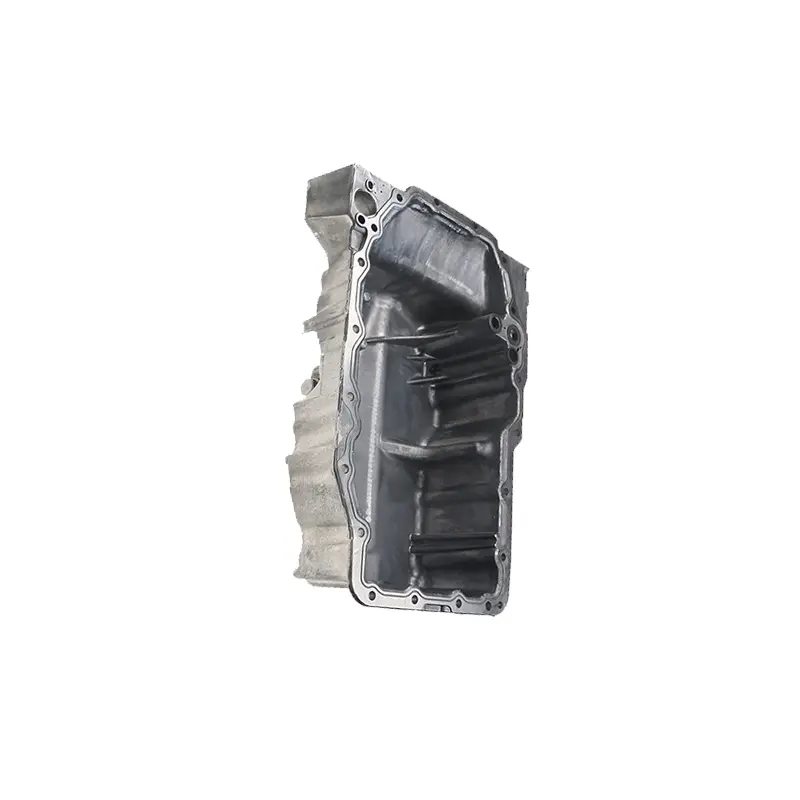
The 200V05840-0128 Oil Pan Bracket is a precision-engineered structural component designed for the oil pan mounting system of Howo/Sitrak truck parts heavy-duty diesel engines. This individual bracket serves a critical function in the multi-point fastening system that secures the engine oil pan to the cylinder block, distributing the concentrated clamping force of individual mounting bolts across a wider area of the oil pan flange to create uniform gasket compression. The bracket is manufactured from high-strength low-alloy (HSLA) steel with a precisely formed channel profile that provides the structural stiffness necessary to resist deflection under bolt torque while maintaining the flexibility required to accommodate thermal expansion of the engine assembly. The 200V05840-0128 bracket is positioned along the longitudinal side rail of the oil pan, where it spans multiple bolt positions to create a continuous line of clamping force that prevents gasket extrusion, uneven compression, and the progressive oil leakage that can develop when the oil pan is bolted directly to the engine block without the load-distribution provided by the bracket. The bracket’s bolt hole pattern is machined to precise tolerances that ensure accurate alignment with the engine block threaded holes, while the controlled clearances allow the bracket to self-align during the installation process. The component receives a comprehensive corrosion protection system consisting of zinc-nickel alloy electroplating, trivalent chromium passivation, and a silicate-based sealer, providing durable protection against the aggressive chemical, thermal, and environmental conditions encountered in the heavy-duty diesel engine compartment. When correctly installed and torqued to the manufacturer’s specification, the 200V05840-0128 bracket provides reliable, maintenance-free service for the full operational life of the engine, contributing to the overall durability and leak-free performance of the engine lubrication system.
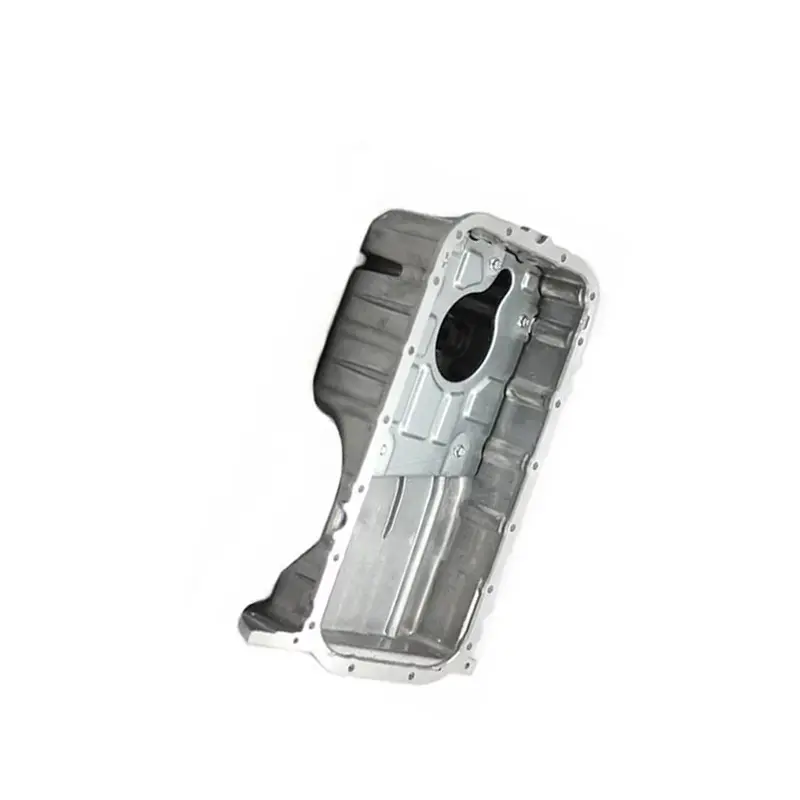
Oil Pan Bracket

Кронштейн масляного поддона
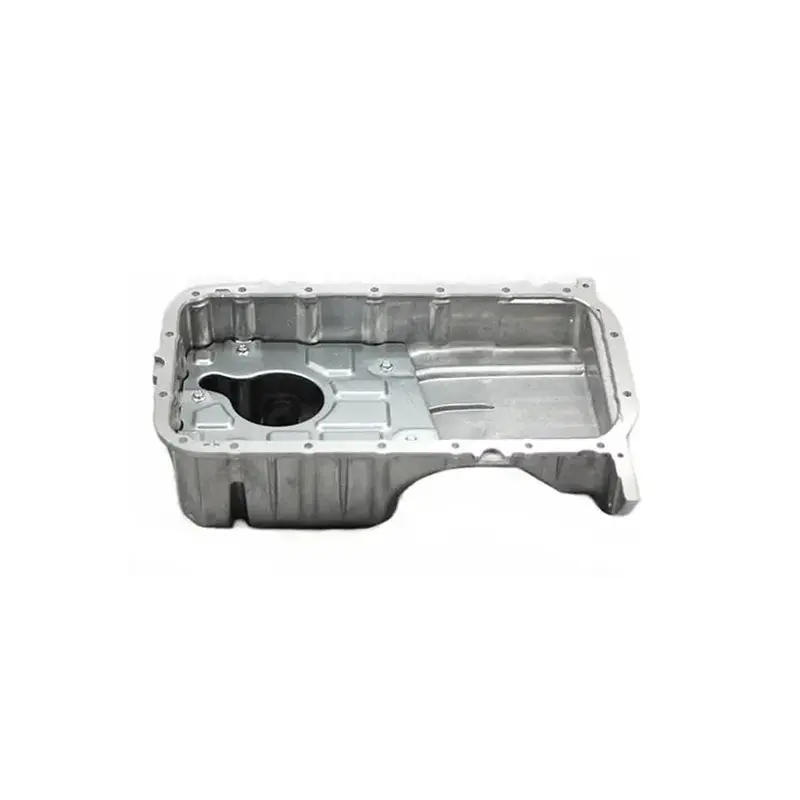
Soporte del cárter de aceite
The 200V05840-0128 bracket is produced through a sophisticated multi-stage manufacturing process that begins with the selection of HSLA steel coil stock that meets the specified chemical composition and mechanical property requirements. The steel is first blanked into individual flat blanks using a precision blanking die that maintains tight dimensional tolerances on the blank outline. The flat blank then undergoes a cold-forming process in a progressive stamping die, where it is formed into the channel profile through a series of carefully designed forming stations. Each forming station incrementally shapes the metal, controlling the material flow to minimize thinning, cracking, and springback. The progressive die also pierces the bolt holes, with the piercing punches designed to create clean, burr-free holes that meet the required diameter tolerance. After forming, the bracket undergoes a stress-relief heat treatment that eliminates the residual stresses introduced during the cold-forming process, stabilizing the bracket’s geometry and preventing dimensional changes during subsequent processing or in service. The bracket then receives the corrosion protection coating — first the zinc-nickel alloy is electrodeposited onto the surface, then the trivalent chromium passivation layer is applied to enhance the corrosion resistance of the zinc-nickel coating, and finally the silicate sealer is applied to provide the ultimate barrier against environmental attack. Each bracket is inspected at multiple points in the manufacturing process — dimensional inspection of the formed bracket, coating thickness measurement after plating, and corrosion resistance testing of samples from each production lot. The part number is stamped into the bracket at a visible location, providing permanent identification that remains legible throughout the bracket’s service life. This comprehensive manufacturing process, with its multiple quality control checkpoints, ensures that every 200V05840-0128 bracket meets the demanding specifications required for reliable performance in heavy-duty diesel engine service.
The 200V05840-0128 bracket operates in one of the most corrosion-aggressive environments in the vehicle — the lower engine compartment, where it is exposed to road splash containing water, salt, and de-icing chemicals, as well as to engine oil, diesel fuel, and the elevated temperatures of the engine crankcase. The bracket’s corrosion protection system is engineered to provide durable protection against this multi-faceted corrosive attack. The zinc-nickel alloy electroplating is the foundation of the protection system — the zinc provides sacrificial (galvanic) protection, corroding preferentially to the steel substrate, while the nickel content (typically 12 to 15 percent) significantly enhances the corrosion resistance compared to pure zinc plating. The zinc-nickel coating is applied to a thickness of 8 to 12 micrometers, providing a substantial barrier between the steel substrate and the corrosive environment. The trivalent chromium passivation layer, applied over the zinc-nickel coating, creates a thin, inert film that passivates the zinc surface and provides additional corrosion resistance. Unlike the older hexavalent chromium passivation processes, the trivalent chromium process is environmentally friendly and compliant with the European Union’s End-of-Life Vehicle (ELV) Directive and the Restriction of Hazardous Substances (RoHS) Directive. The silicate sealer is the final layer of the protection system — it penetrates the microscopic pores in the passivation layer and the zinc-nickel coating, sealing them against moisture ingress and providing an additional barrier against chemical attack. The complete three-layer system is tested to withstand 720 hours of neutral salt spray exposure (per ISO 9227) without the development of red rust on significant surfaces, demonstrating the exceptional corrosion resistance that ensures the bracket maintains its structural integrity and clamping force throughout the vehicle’s service life. The corrosion protection system also provides an aesthetically pleasing silver-gray finish that resists discoloration and maintains a professional appearance even after years of service.
The 200V05840-0128 bracket’s dimensional accuracy is critical to its function — even small deviations from the specified dimensions can result in misalignment of the bolt holes, uneven seating against the oil pan flange, or incorrect gasket compression. The bracket’s critical dimensions are controlled to tight tolerances: the bolt hole center-to-center spacing is maintained within ±0.1mm of the nominal dimension, the bolt hole diameter is controlled within +0.2/-0.0mm of the nominal diameter, and the bracket’s overall length is maintained within ±0.3mm. The channel profile dimensions — including the flange width, the channel depth, and the channel width — are controlled to ensure that the bracket seats correctly against the oil pan flange and provides the specified gasket compression. The bracket’s flatness is controlled to within 0.2mm per 100mm of length, ensuring uniform contact with the oil pan flange surface. The edge condition of the bracket is controlled to remove sharp edges and burrs that could cut the gasket material or injure the technician during handling and installation. The dimensional accuracy is verified through a combination of in-process checks during manufacturing and final inspection of completed brackets. Coordinate measuring machine (CMM) inspection is used for first-article approval and periodic production audits, while go/no-go gauges and attribute checks are used for routine production inspection. The bracket’s dimensional consistency is a key factor in the ease and reliability of the installation process — a bracket that fits correctly on the first attempt reduces installation time and eliminates the frustration and potential damage associated with forcing a poorly fitting component. The dimensional accuracy also ensures that the bracket’s load-distribution function is performed as designed, with the bolt loads being distributed evenly across the oil pan flange and the gasket being compressed uniformly along the sealing surface.
The 200V05840-0128 bracket must accommodate the differential thermal expansion that occurs between the various components of the oil pan mounting system as the engine temperature changes from cold ambient to full operating temperature. The engine block, typically cast iron or compacted graphite iron, has a coefficient of thermal expansion (CTE) of approximately 10 to 12 micrometers per meter per degree Celsius. The oil pan, typically stamped steel, has a similar CTE of approximately 11 to 13 micrometers per meter per degree Celsius. The bracket itself, made of HSLA steel, has a CTE similar to the oil pan. However, the gasket material, typically a multi-layer steel (MLS) design with elastomer sealing beads, has a different thermal response — the elastomer material softens at elevated temperatures, reducing its sealing pressure, while the steel layers expand at the same rate as the other steel components. The bracket’s design accommodates these thermal effects through several features. The bolt hole clearances are sized to allow the bracket to shift slightly relative to the bolts as the components expand and contract, preventing the buildup of thermal stresses that could cause the bracket to yield or the bolts to loosen. The bracket’s channel profile provides adequate flexibility to accommodate the small differences in thermal expansion between the bracket and the engine block without exceeding the elastic limit of the steel. The bracket’s flat contact surface maintains full contact with the oil pan flange across the full temperature range, ensuring that the gasket compression is not compromised by thermal distortion of the bracket. The bracket’s material selection — HSLA steel with its high yield strength and good ductility — ensures that the bracket can withstand the cyclic thermal stresses without fatigue cracking or permanent deformation. The bracket’s thermal accommodation features are particularly important in applications where the engine experiences frequent thermal cycling, such as in stop-start urban delivery operations or in cold-climate operations where the engine is started from very low ambient temperatures. In these applications, the bracket’s ability to accommodate thermal expansion and contraction without compromising its clamping force is essential for maintaining a leak-free oil pan seal over the long term.
| Specification | Detail |
|---|---|
| OEM Part Number | 200V05840-0128 |
| Product Type | Oil Pan Mounting Bracket (Individual) |
| Mounting Position | Longitudinal (Side Rail) |
| Material | HSLA Steel, 3mm Thickness |
| Yield Strength | ≥ 350 MPa |
| Tensile Strength | ≥ 450 MPa |
| Elongation | ≥ 20% |
| Bolt Hole Quantity | 3 Positions |
| Bolt Specification | M8 x 1.25, Class 10.9 |
| Bolt Torque | 25 Nm (3-Stage Progressive) |
| Hole Spacing Tolerance | ±0.1mm |
| Flatness | ≤ 0.2mm / 100mm |
| Surface Treatment | Zn-Ni + Cr(III) Passivation + Silicate Sealer |
| Salt Spray Resistance | ≥ 720 Hours (ISO 9227) |
| Operating Temperature | -40°C to +200°C |
| Engine Compatibility | Sinotruk MC11 / MC13 Series |
| Weight | Approximately 0.42 kg |
The 200V05840-0128 bracket is an original equipment manufacturer component, designed and manufactured to the exact specifications established by the engine manufacturer’s engineering team. The OEM bracket benefits from the extensive research, development, and validation testing that was conducted during the engine’s design process — the bracket’s dimensions, material properties, and performance characteristics were determined through computer-aided engineering analysis, laboratory testing, and vehicle-level durability testing that validated the bracket’s performance under realistic operating conditions. The bracket’s design is integrated with the design of the oil pan, the gasket, the engine block, and the other brackets in the mounting system, ensuring that all components work together harmoniously. Aftermarket brackets, by contrast, are typically reverse-engineered from samples of the OEM bracket, and the reverse-engineering process cannot capture all of the subtle design features that contribute to the bracket’s performance. The reverse-engineered bracket may have slightly different dimensions, material properties, or surface finish characteristics that, while individually small, can collectively result in performance that does not match the OEM bracket. The aftermarket bracket’s corrosion protection may also be inferior to the OEM specification, leading to premature corrosion and loss of clamping force. The modest cost difference between the OEM bracket and an aftermarket alternative is a small investment in the engineering integrity that ensures reliable, long-term performance. For maintenance professionals who understand that the quality of the repair is determined by the quality of the components used, the OEM bracket is the logical choice for ensuring a repair that meets the original equipment manufacturer’s standards.
The 200V05840-0128 bracket benefits from the comprehensive supply chain traceability that is inherent in the OEM parts distribution system. Each bracket can be traced from its point of manufacture through the distribution network to the point of installation, providing a complete chain of custody that is valuable for quality assurance, warranty administration, and counterfeit parts detection. The bracket’s packaging includes a barcode label that contains the part number, the production lot number, and the manufacturing date — this information can be scanned into the repair facility’s inventory management system, creating a digital record of the part’s origin. The lot number provides traceability back to the specific production batch, including the steel heat number, the plating batch, and the inspection records. If a quality issue is identified with a particular production lot, the traceability system allows the affected brackets to be identified and recalled before they are installed, preventing potential failures. The traceability information is also valuable for warranty claims — if a bracket fails prematurely, the lot number can be used to investigate whether the failure was caused by a manufacturing defect in that specific production batch or by other factors such as improper installation or operation outside the design parameters. For fleet operators who maintain detailed maintenance records, the ability to trace the origin of each installed part provides a level of quality assurance that is not available with aftermarket components. The OEM supply chain traceability is a valuable feature that supports quality management, warranty administration, and the continuous improvement of manufacturing processes.
The 200V05840-0128 bracket is available through the OEM parts distribution network, which provides consistent availability across a wide geographic area. The OEM distribution network maintains inventory at multiple levels — central distribution centers, regional warehouses, and local dealer parts departments — ensuring that the bracket is available when and where it is needed. For fleet operators with vehicles operating across a wide geographic area, the availability of the correct OEM bracket through the dealer network means that repairs can be completed quickly, regardless of where the vehicle is located when the repair is needed. The OEM distribution network also provides technical support — if a parts counter representative or a technician has a question about the bracket’s application or installation, the OEM’s technical support resources are available to provide accurate information. The consistent availability of the OEM bracket reduces vehicle downtime, which is critical for commercial vehicles where every day out of service represents lost revenue. The ability to obtain the correct bracket quickly, without the delays associated with sourcing aftermarket components of uncertain quality and fitment, is a significant operational advantage for fleet maintenance operations. The OEM bracket’s availability is also supported by the manufacturer’s commitment to maintaining parts availability for a specified period after the engine model is discontinued, ensuring that the bracket will be available for the expected service life of the vehicles in the fleet. This long-term parts availability commitment is particularly valuable for fleet operators who plan to keep their vehicles in service for many years.
When evaluating the cost of the 200V05840-0128 bracket, it is important to consider the total cost of ownership (TCO) rather than just the purchase price. The TCO includes the cost of the bracket itself, the cost of installation labor, the cost of any additional parts required (such as bolts and gaskets), the cost of potential rework if the bracket does not fit correctly or fails prematurely, and the cost of vehicle downtime during the repair. The OEM bracket’s consistent dimensional accuracy and correct fitment minimize the installation labor cost — the bracket fits correctly on the first attempt, without the need for adjustment or modification. The OEM bracket’s reliable performance minimizes the risk of rework due to oil leaks, which can be expensive in terms of additional parts, labor, and vehicle downtime. The OEM bracket’s corrosion protection ensures that it maintains its clamping force throughout the vehicle’s service life, reducing the risk of age-related oil leaks that require unscheduled maintenance. When these factors are considered, the OEM bracket’s slightly higher purchase price compared to an aftermarket alternative is typically more than offset by the savings in installation labor, reduced rework, and lower vehicle downtime. For fleet operators who track maintenance costs per kilometer, the use of OEM components is a proven strategy for minimizing the total cost of ownership and maximizing vehicle availability. The 200V05840-0128 OEM bracket is an investment in repair quality that pays dividends over the life of the vehicle through reduced maintenance costs and improved operational reliability.
Installing the 200V05840-0128 bracket requires careful attention to the preparation, positioning, and torque sequence to ensure a reliable oil pan seal. Begin by thoroughly cleaning the oil pan flange and the engine block sealing surface, removing all traces of the old gasket material, sealant, and oil residue. The surfaces must be clean and dry for the new gasket to achieve a proper seal. Verify the part number stamped on the bracket against the vehicle service manual to confirm the correct bracket for the intended position. Remove the protective oil coating from the bracket using a solvent wipe — this coating is applied for corrosion protection during storage and transit and should be removed before installation to ensure proper bolt torque and gasket adhesion. Position the new gasket on the engine block or oil pan flange according to the service manual instructions. Place the oil pan against the engine block and position the bracket over the oil pan flange, ensuring the bracket’s contour matches the flange profile. Install the bolts through the bracket, oil pan flange, and gasket, threading each bolt finger-tight only. Tighten the bolts in a three-stage progressive sequence: first stage to 10 Nm, second stage to 18 Nm, final stage to 25 Nm. The tightening sequence should start from the center bolt and work outward toward the ends. After completing the torque sequence, visually inspect the bracket-to-flange interface — the gap should be uniform from end to end, with no visible step or tilt. After the engine has been run for one complete heat cycle (from cold to full operating temperature and back to cold), recheck the bolt torque. The installation is complete when all bolts are at the specified torque and the bracket is seated evenly against the oil pan flange.
Regular inspection of the 200V05840-0128 bracket is an important part of preventive maintenance. The inspection should be performed at each engine oil change, which is typically every 10,000 to 30,000 kilometers depending on the vehicle’s operating conditions and the oil type used. Use a flashlight to inspect the bracket from underneath the vehicle. Look for signs of oil seepage at the gasket line adjacent to the bracket — a dark, damp area around the gasket line indicates oil seepage, while a visible drip indicates a more significant leak. Inspect the bracket for visible deformation, cracks, or corrosion. Check the bolt heads for signs of loosening — a clean, shiny ring around a bolt head that differs from the dirt accumulation pattern on adjacent bolts may indicate that the bolt has moved. If oil seepage is observed, the first step is to recheck the bolt torque. If the bolts are at the correct torque and the seepage persists, the gasket or the bracket may need to be replaced. If the bracket is found to be deformed or cracked, it should be replaced immediately — a damaged bracket cannot provide the uniform gasket compression required for a reliable seal. If corrosion is observed on the bracket surface, assess the severity — light surface corrosion that has not penetrated the coating is acceptable, but pitting corrosion that has penetrated the coating and started to attack the base metal is a concern that warrants bracket replacement at the next convenient service opportunity. The inspection findings should be documented in the vehicle maintenance record, providing a historical record that can be valuable for trend analysis and maintenance planning. A bracket that is properly maintained and inspected will provide reliable service for the full operational life of the engine.
What is the difference between the 200V05840-0128 and other similar brackets?
The 200V05840-0128 bracket is one of several brackets in the Sinotruk MC11/MC13 engine oil pan mounting system, and each bracket is designed for a specific position on the engine. The brackets are differentiated by their part numbers, which correspond to specific mounting positions. The brackets may appear similar at first glance — they are all made from the same HSLA steel material, have the same general channel profile, and receive the same corrosion protection treatment. However, the brackets differ in their specific dimensions — the bolt hole spacing, the overall length, the channel depth, and the flange width are all tailored to the specific mounting position. A bracket that is designed for one position will not fit correctly in a different position — the bolt holes will not align with the engine block threads, or the bracket will not seat correctly against the oil pan flange. The brackets are also differentiated by their stiffness characteristics, which are tuned to match the stiffness of the adjacent brackets in the system. Installing a bracket in the wrong position disrupts the system-level stiffness balance, potentially creating zones of uneven gasket compression that can lead to oil leakage. The correct bracket for each position is identified in the vehicle’s electronic parts catalog (EPC), which uses the vehicle’s VIN to determine the correct part numbers for all components. The part number is also stamped on the bracket itself, allowing visual verification before installation. If you are uncertain which bracket is required for a specific position, consult the EPC or the vehicle service manual — do not attempt to guess based on the bracket’s appearance, as the visual differences between brackets can be subtle.
Should the bolts be replaced when installing a new 200V05840-0128 bracket?
The bolts used to secure the 200V05840-0128 bracket are M8 x 1.25 Class 10.9 flange-head bolts, and they should be inspected carefully during the bracket replacement process. The bolts are subjected to significant tensile stress when torqued to 25 Nm, and they are exposed to the same corrosive environment as the bracket. Over time, the bolts can experience corrosion, thread damage, or a reduction in clamping force due to material relaxation. The general recommendation is to replace the bolts if any of the following conditions are observed: visible corrosion on the bolt head or threads, damage to the hex drive socket (rounded corners), thread deformation or galling, or if the bolt has been removed and reinstalled more than three times. The bolts are relatively inexpensive, and the cost of replacing them is small compared to the cost of a repair that fails due to inadequate bolt clamping force. If the original bolts are to be reused, they should be cleaned to remove any dirt or corrosion, and the threads should be inspected under magnification for any signs of cracking or deformation. The bolt threads should be lightly lubricated with engine oil before installation to ensure consistent torque-tension relationship — the specified torque value assumes lubricated threads, and dry threads will result in lower clamping force for the same torque. The bolt tightening sequence should follow the same three-stage progressive pattern as the initial installation, even if the same bolts are being reused. The bolt torque should be rechecked after the first heat cycle, regardless of whether the bolts are new or reused. If there is any doubt about the condition of the bolts, replace them — the cost of new bolts is a worthwhile investment in the reliability of the repair.
How does the 200V05840-0128 bracket contribute to engine noise reduction?
The 200V05840-0128 bracket contributes to engine noise reduction through its role in the oil pan mounting system. The oil pan is a large, thin-walled structure that can act as a noise-radiating surface, amplifying and transmitting the noise generated by the engine’s internal components — the crankshaft, connecting rods, pistons, and the oil pump. The bracket’s load-distribution function helps to dampen the vibration of the oil pan by providing a continuous, uniform clamping force that prevents the oil pan from vibrating independently of the engine block. Without the bracket, the oil pan would be secured only at the discrete bolt locations, and the unsupported areas between the bolts could vibrate like a drumhead, generating noise. The bracket’s formed channel profile adds stiffness to the oil pan flange, increasing the natural frequency of the oil pan assembly and shifting it away from the engine’s primary vibration frequencies. The bracket’s mass also contributes to the damping of the oil pan assembly, absorbing vibrational energy and reducing the amplitude of the noise-radiating vibrations. The bracket’s clamping force ensures that the oil pan is in intimate contact with the engine block, eliminating the possibility of impact noise if the oil pan were to lose contact with the block during vibration. The cumulative effect of these noise-reduction mechanisms is a quieter engine, which contributes to driver comfort and compliance with vehicle noise regulations. While the bracket is not primarily a noise-control component, its contribution to engine noise reduction is a valuable secondary benefit of its primary function of maintaining a leak-free oil pan seal.
Can the 200V05840-0128 bracket be powder coated for additional protection?
Applying additional coatings, such as powder coating, to the 200V05840-0128 bracket is not recommended and may compromise the bracket’s performance. The bracket’s factory-applied zinc-nickel alloy electroplating with trivalent chromium passivation and silicate sealer provides excellent corrosion protection that is specifically designed for the bracket’s operating environment. Adding a powder coating over the factory finish introduces several potential problems. The powder coating process requires the bracket to be heated to approximately 180 to 200 degrees Celsius for curing, which is close to the tempering temperature of the HSLA steel and could potentially alter the bracket’s mechanical properties. The powder coating adds thickness to the bracket’s surfaces, which could affect the fit of the bracket against the oil pan flange and the bolt holes. The powder coating could also chip or crack under the clamping pressure of the bolts, creating pathways for moisture to reach the underlying metal and initiate corrosion in the crevice between the coating and the metal surface. The bracket’s factory corrosion protection system has been validated through extensive testing and field experience to provide adequate protection for the bracket’s service life. If additional corrosion protection is desired for vehicles operating in extremely corrosive environments, such as mining operations or coastal marine applications, the recommended approach is to apply a corrosion-inhibiting spray (such as a lanolin-based or wax-based product) to the bracket and surrounding area after installation, rather than modifying the bracket’s factory coating. The spray-on corrosion inhibitor can be reapplied periodically as part of the vehicle’s preventive maintenance program, providing ongoing protection without the risks associated with permanent coating modifications.
The 200V05840-0128 Oil Pan Bracket represents a critical element in the engine lubrication system’s integrity and reliability. This precision-formed steel component, though seemingly simple in its appearance, performs the essential engineering function of distributing concentrated bolt loads into uniform gasket compression, maintaining the oil-tight seal that protects the engine’s lifeblood from contamination and loss. The bracket’s design reflects a sophisticated understanding of the complex interactions between the oil pan, the gasket, the engine block, and the other brackets in the mounting system — interactions that determine whether the oil pan seal will remain leak-free for hundreds of thousands of kilometers or develop the progressive leaks that lead to oil loss, contamination, and potentially catastrophic engine damage. The bracket’s corrosion protection system, dimensional accuracy, and thermal expansion accommodation are the products of rigorous engineering analysis and validation testing, ensuring that the bracket performs reliably under the demanding conditions of heavy-duty commercial vehicle service. For maintenance professionals who understand that the foundation of a reliable repair is the quality of every component used, the 200V05840-0128 OEM bracket is an investment in repair integrity, customer satisfaction, and professional reputation. The correct bracket, properly installed according to the manufacturer’s specifications, provides the assurance of a leak-free oil pan seal that will protect the engine and the environment for the full service life of the vehicle.


