


The 202V97401-0580 Snap-On Pipe Clamps are high-performance fastening components designed to provide secure, vibration-resistant mounting of pipes, tubes, and hoses throughout the chassis and engine bay of Howo/Sitrak truck parts heavy-duty commercial vehicles. These clamps feature an innovative snap-on closure mechanism that enables rapid, tool-free installation while maintaining exceptional clamping force and retention reliability under the most demanding operating conditions. Manufactured from high-grade engineering polymers with a reinforced structural design, the clamps provide a unique combination of lightweight construction, excellent chemical resistance, and superior vibration damping compared to traditional metallic clamps. The snap-on design incorporates an integrated locking feature that produces an audible confirmation of proper engagement, eliminating the uncertainty associated with torque-dependent fastening methods. The clamps are engineered to accommodate thermal expansion and contraction of the secured pipes without loss of clamping force, making them ideal for applications in engine compartments and exhaust system proximity zones where temperature variations are extreme.

Snap-On Pipe Clamps
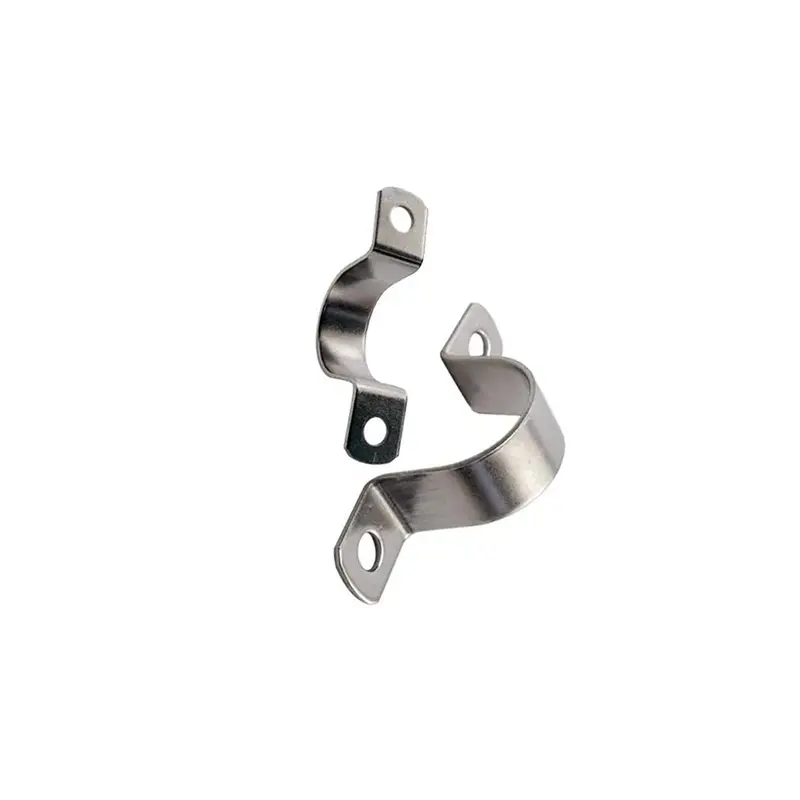
Защелкивающиеся трубные хомуты
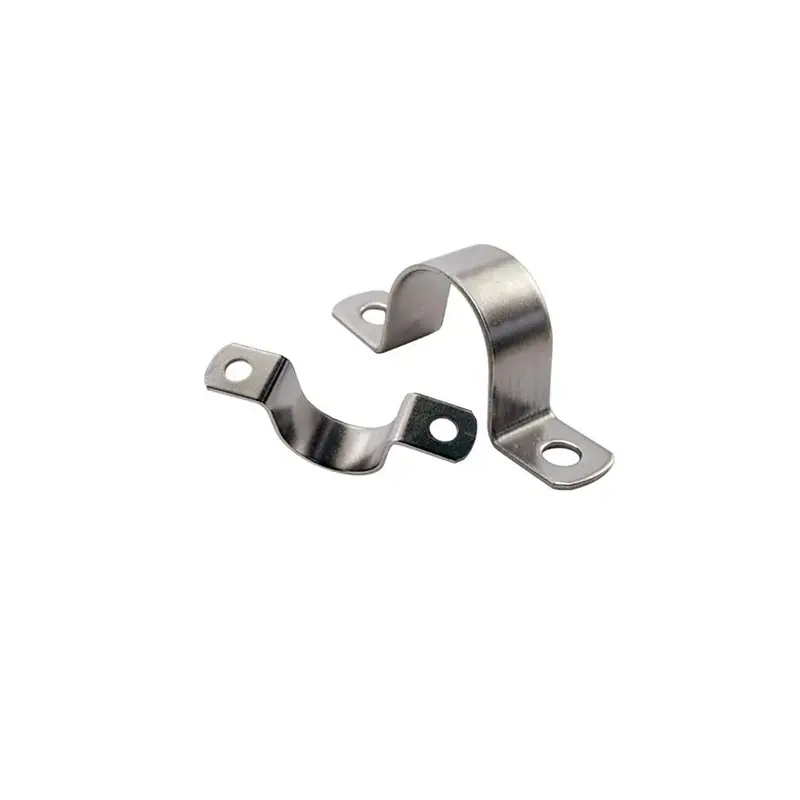
Abrazaderas de tubería a presión
The defining characteristic of these pipe clamps is their innovative snap-on closure mechanism, which fundamentally changes the installation process compared to traditional bolted or screw-type clamps. The clamp body features a resilient hinge section and a mating latch mechanism that allows the clamp to be opened, positioned around the pipe, and closed with a simple pressing motion. The latch design incorporates an angled lead-in ramp that guides the two halves of the clamp into alignment, followed by a positive locking detent that snaps into place with an audible click when full engagement is achieved. This audible feedback provides immediate confirmation to the installer that the clamp is correctly closed, eliminating the uncertainty of whether a bolted clamp has been tightened sufficiently. The snap-on mechanism is designed to withstand thousands of open-close cycles without degradation in clamping force or latch engagement, ensuring reliable performance even in applications where the clamp may need to be removed and reinstalled multiple times during vehicle service. The tool-free operation significantly reduces installation time on the vehicle assembly line and simplifies maintenance operations in the field.
The clamp body is manufactured from a high-performance engineering thermoplastic, specifically a glass-fiber-reinforced polyamide (PA66-GF) compound that offers an exceptional balance of mechanical strength, thermal stability, and chemical resistance. The glass fiber reinforcement, typically at a loading of 25% to 30% by weight, provides a substantial increase in tensile strength, flexural modulus, and creep resistance compared to unreinforced polymers. The material maintains its mechanical properties across a temperature range from -40°C to +140°C, with short-term capability to +160°C, making it suitable for underhood and chassis applications where temperatures can vary dramatically. The polymer construction provides inherent corrosion resistance that eliminates the rust and degradation issues associated with metallic clamps in road-salt and high-humidity environments. Additionally, the polymer material provides excellent chemical resistance to diesel fuel, engine oil, coolant, brake fluid, and common cleaning agents, ensuring that accidental fluid contact during maintenance or operation does not degrade the clamp’s performance.
The polymer construction of the snap-on pipe clamps provides significant advantages in vibration damping and noise reduction compared to traditional metallic clamps. The viscoelastic nature of the polymer material allows it to absorb and dissipate vibrational energy as low-grade heat through internal molecular friction, a mechanism known as hysteretic damping. This damping effect is particularly effective at the higher frequencies (above 500 Hz) that are most annoying to vehicle occupants and most damaging to pipe and tube structures. Laboratory testing on a shaker table has demonstrated that polymer clamps can reduce vibration transmission to the secured pipe by up to 12 dB compared to equivalent steel clamps, significantly reducing the risk of fatigue-induced pipe failure. The polymer material also provides acoustic isolation between the pipe and the chassis structure, preventing the transmission of flow-induced noise from the pipe into the vehicle cabin. This is particularly valuable for fuel lines, where the pulsating flow from the transfer pump and injectors can create audible noise that is transmitted through rigid metallic clamps into the chassis structure.
The polymer snap-on clamp design offers significant weight reduction compared to traditional metallic clamps, an important consideration in modern commercial vehicle design where every kilogram saved contributes to increased payload capacity and improved fuel efficiency. A typical polymer snap-on clamp weighs approximately 30% to 50% less than an equivalent steel clamp, and when multiplied by the hundreds of clamps used throughout a typical heavy-duty truck chassis, the cumulative weight savings can be substantial. Beyond the direct weight reduction, the polymer clamp’s compact design and integrated mounting features reduce the packaging space required for pipe securing, allowing designers to route pipes in tighter spaces and closer to other components. The snap-on mechanism eliminates the need for wrench access clearance around the clamp, further simplifying packaging and enabling more compact vehicle designs. The clamps are also available in a range of colors that can be used for visual identification of different fluid circuits, simplifying assembly and maintenance by allowing technicians to quickly identify which pipes belong to which system based on clamp color.
| Parameter | Specification | Standard |
|---|---|---|
| OEM Part Number | 202V97401-0580 | Howo Internal |
| Product Type | Snap-On Pipe Clamps | — |
| Body Material | Glass-Fiber-Reinforced Polyamide (PA66-GF25/30) | ISO 1874 |
| Closure Mechanism | Integrated Snap-On Latch with Audible Engagement | — |
| Operating Temperature | -40°C to +140°C (continuous), +160°C (short-term) | — |
| Tensile Strength | ≥ 120 MPa (dry as molded) | ISO 527 |
| Flexural Modulus | ≥ 6,000 MPa | ISO 178 |
| Chemical Resistance | Resistant to diesel, oil, coolant, brake fluid, road salt | ISO 175 |
| Latch Cycle Life | ≥ 500 open-close cycles | — |
| Vibration Damping | Up to 12 dB reduction vs. steel clamps (above 500 Hz) | — |
| Flammability Rating | HB (Horizontal Burn) | UL 94 |
| Vehicle Compatibility | Howo A7, Howo T7H, Howo MAX, Sitrak C7H, Sitrak G7 | — |
Dramatic Reduction in Assembly and Service Time: The tool-free snap-on design of these clamps delivers significant productivity improvements in both vehicle assembly and field service operations. On the assembly line, the elimination of wrench operations for each clamp reduces the cycle time for pipe installation stations, allowing higher production rates or reduced labor content. The audible confirmation of correct engagement eliminates the need for torque verification or quality inspection of each clamp, further streamlining the assembly process. In field service, technicians can remove and replace clamps in seconds rather than minutes, reducing the labor time required for repairs that involve pipe or hose replacement. The elimination of threaded fasteners also removes the risk of lost or dropped nuts and bolts during maintenance operations in cramped engine compartments. For fleet operators who perform their own maintenance, the cumulative time savings from using snap-on clamps across hundreds of pipe securing points can translate into measurable reductions in vehicle downtime and maintenance labor costs.
Elimination of Corrosion-Related Failure Modes: Corrosion is one of the leading causes of pipe clamp failure in heavy-duty truck applications, particularly in regions where road salt is used for winter ice control or where vehicles operate in coastal or humid environments. Traditional steel clamps, even those with zinc plating or other protective coatings, are susceptible to corrosion that can weaken the clamp structure, cause the clamp to seize on the pipe, or create galvanic corrosion cells between the clamp and the pipe material. Polymer snap-on clamps are completely immune to these corrosion mechanisms, as the polymer material does not oxidize, does not participate in galvanic reactions, and does not require protective coatings that can be damaged during installation. The elimination of corrosion-related failure modes extends the functional lifespan of the clamp and reduces the need for clamp replacement during vehicle service. This is particularly important in applications where the clamp is installed in a location that is difficult to access for inspection and replacement, such as behind the engine or above the transmission.
Consistent Clamping Force Without Torque Dependence: Traditional bolted pipe clamps rely on the correct application of tightening torque to achieve the designed clamping force. Under-tightening results in insufficient clamping force and the risk of pipe movement or rattling, while over-tightening can crush or deform the pipe, particularly in the case of plastic or thin-wall metal tubing. The snap-on clamp design eliminates this torque dependence by providing a defined clamping force that is determined by the geometry of the clamp and the properties of the material, not by the skill or attention of the installer. Once the latch engages, the clamping force is consistent and repeatable regardless of who installed the clamp or under what conditions. This consistency is particularly valuable in assembly line environments where hundreds of clamps are installed per shift by different operators, and in field service where technicians may have varying levels of experience and training. The elimination of torque dependence also means that the clamp cannot be inadvertently loosened by vibration, as the latch mechanism is self-locking and does not rely on thread friction to maintain its position.
Electrical Isolation for Galvanic Corrosion Prevention: When dissimilar metals are in contact in the presence of an electrolyte such as road spray, galvanic corrosion can occur, with the more active metal corroding preferentially. This is a common problem in automotive applications where steel clamps secure aluminum, copper, or stainless steel pipes. The polymer snap-on clamp provides complete electrical isolation between the pipe and the chassis structure, eliminating the galvanic cell and preventing the associated corrosion. This isolation is particularly important for air conditioning lines, where aluminum pipes are commonly used to reduce weight and improve heat transfer, and for fuel lines, where copper or copper-nickel alloy pipes may be used for their corrosion resistance and formability. The polymer clamp also provides thermal isolation, reducing heat transfer from hot chassis components to temperature-sensitive pipes such as those carrying air conditioning refrigerant or diesel exhaust fluid. This thermal isolation can improve system efficiency and protect temperature-sensitive fluids from degradation.
The snap-on pipe clamp is designed for intuitive, error-proof installation, but following best practices ensures optimal performance. Before installation, verify that the clamp size is correct for the pipe diameter being secured. The clamp should fit snugly around the pipe without excessive clearance that would allow movement, but without being so tight that it compresses or deforms the pipe. Position the clamp on the pipe at the intended mounting location, ensuring that the pipe is properly aligned and that the clamp will not interfere with adjacent components. Open the clamp by releasing the latch, using a small flat-blade screwdriver if necessary to disengage the locking tab. Place the open clamp around the pipe, then close the two halves together, pressing firmly until the latch engages with an audible click. Verify closure by visually confirming that the latch is fully seated and by attempting to pull the clamp open with moderate force. For clamps with an integral mounting feature, ensure that the mounting stud, bracket, or rail is properly engaged before closing the clamp. The clamp should be installed at a temperature above 0°C to ensure optimal material flexibility during the latching operation.
The snap-on pipe clamps should be inspected during regular vehicle maintenance intervals, particularly when the vehicle is on a lift for chassis lubrication or brake inspection where the underbody and chassis components are readily accessible. During inspection, visually check each clamp to confirm that the latch is fully engaged and that the clamp is securely gripping the pipe. Look for signs of physical damage such as cracks, deformation, or discoloration that could indicate thermal degradation or chemical attack. Verify that the pipe has not shifted within the clamp, which could indicate that the clamp has lost its grip due to wear or damage. Check that the clamp’s mounting to the chassis structure is secure and that the clamp itself has not moved from its intended position. Any clamp showing signs of damage, latch failure, or loss of clamping force should be replaced immediately. To remove a clamp, use a small flat-blade screwdriver to gently release the latch tab, then open the clamp and remove it from the pipe. When installing a replacement clamp, follow the installation best practices to ensure correct fitment and engagement. Always maintain a stock of spare clamps in common sizes to enable prompt replacement during maintenance operations.
The snap-on pipe clamps are available in a range of sizes to accommodate the various pipe diameters used throughout the Howo and Sitrak truck chassis. The specific clamp size is determined by the inner diameter of the closed clamp, which should match the outer diameter of the pipe being secured. Common applications include fuel lines with diameters ranging from 6mm to 12mm, brake system nylon tubing from 8mm to 16mm, air suspension lines from 6mm to 10mm, and coolant and heater hoses from 15mm to 25mm. The clamp is designed to grip the pipe with a specific interference fit that provides secure retention without excessive compression. Using a clamp that is too large will result in insufficient grip and potential pipe movement, while using a clamp that is too small may prevent proper latch engagement or may crush the pipe. The correct clamp size for each application is specified in the vehicle service manual and parts catalog, and using the specified size is essential for achieving the designed clamping performance.
The snap-on pipe clamps are designed to be reusable for a limited number of cycles, as specified in the technical data sheet. The latch mechanism is engineered to maintain its engagement force and locking integrity through at least 500 open-close cycles under normal conditions, which is more than sufficient for the expected number of removal and reinstallation events during the vehicle’s service life. However, each cycle does cause microscopic wear on the latch surfaces, and the clamping force may gradually decrease over many cycles. When reusing a clamp, inspect the latch mechanism for signs of wear, including rounding of the latch edges, stress whitening of the polymer material, or reduced engagement force. The clamp should also be inspected for any cracks or damage that may have occurred during removal. If the clamp exhibits any of these signs of degradation, or if it has been removed and reinstalled more than 10 times, it is recommended to replace it with a new clamp. The cost of a new clamp is negligible compared to the potential consequences of a clamp failure in service, and the practice of reusing worn or damaged clamps is a false economy.
The glass-fiber-reinforced polyamide material used in the snap-on clamps is specifically formulated to maintain its mechanical properties across the wide temperature range encountered in automotive applications. At low temperatures down to -40°C, the material retains sufficient ductility to resist brittle fracture from impact loads, and the latch mechanism remains functional, although somewhat stiffer and requiring more force to engage. At high temperatures up to +140°C continuous, the material maintains adequate strength and stiffness to retain the pipe securely, although some reduction in clamping force occurs due to the temperature-dependent modulus of the polymer. For applications where sustained temperatures above +120°C are expected, such as in close proximity to the exhaust manifold or turbocharger, heat shields or alternative clamp materials should be considered. The polymer material also exhibits a small amount of creep under sustained load at elevated temperatures, which can result in a gradual reduction in clamping force over time. This effect has been accounted for in the clamp design, with the initial clamping force set to provide adequate retention even after the long-term creep relaxation has occurred.
Traditional rubber-lined metal clamps have been used in automotive applications for decades and remain a viable option for many applications. However, the snap-on polymer clamp offers several distinct advantages. The polymer material provides corrosion resistance without the need for protective coatings that can be damaged during installation, whereas rubber-lined metal clamps can suffer from corrosion of the metal band and separation of the rubber lining over time. The snap-on mechanism eliminates the need for tools and provides consistent clamping force, whereas metal clamps require a screwdriver or wrench and the clamping force is dependent on the operator’s tightening technique. The polymer clamp is lighter in weight, which contributes to vehicle weight reduction goals. The polymer material provides better vibration damping than metal, reducing the transmission of pipe vibration to the chassis. The snap-on clamp is also generally less expensive to manufacture and install than a rubber-lined metal clamp with a separate mounting bracket. However, metal clamps may still be preferred for applications requiring the highest clamping forces, the highest temperature resistance, or where the clamp must also serve as an electrical ground path.
The Snap-On Pipe Clamps represent a significant evolution in pipe and tube securing technology for heavy-duty commercial vehicles. The 202V97401-0580 clamps, with their innovative polymer construction and tool-free installation mechanism, address many of the limitations and failure modes associated with traditional metallic clamps while providing additional benefits in terms of assembly efficiency, corrosion resistance, and vibration damping. The engineering that has gone into the material selection, latch mechanism design, and manufacturing process for these clamps reflects the automotive industry’s commitment to continuous improvement in component performance and reliability. For Howo and Sitrak truck operators and maintenance professionals, the adoption of genuine OEM snap-on pipe clamps offers a tangible improvement in vehicle quality and a reduction in maintenance burden. The clamps are a practical example of how thoughtful engineering can transform a seemingly simple component into a contributor to overall vehicle excellence.


