


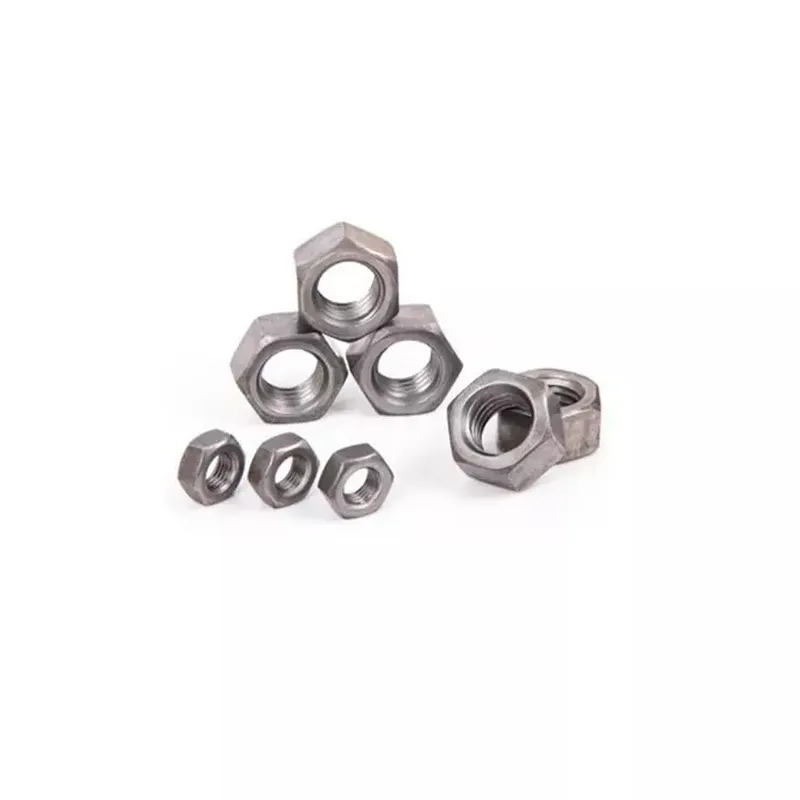
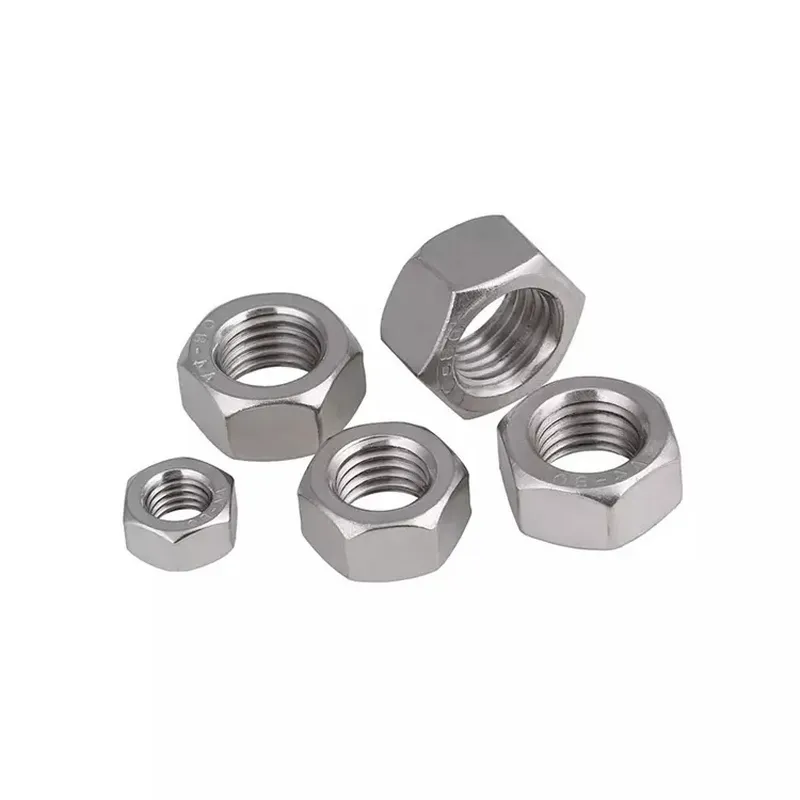
The Type 2 hexagonal nut (thin nut / jam nut) is a critical component in heavy‑duty bolted assemblies, used as a locking element or where space is limited. Manufactured from heat‑treated medium‑carbon alloy steel (grade 10 or 10.9), each ZQ361B16 achieves a proof load of 1,040 MPa and a hardness of 30‑38 HRC. The fine pitch thread (M16×1.5) provides superior vibration resistance compared to coarse threads, and the reduced height (type 2 – approximately 12 mm) allows use as a back‑up nut or in confined areas. SITRAK engineers designed this nut to resist thread stripping, galling, and loosening, offering 50% longer retention life compared to standard commercial nuts.
Precision‑rolled threads (6H tolerance) guarantee smooth engagement with matching bolts or studs. The hexagon faces are precisely formed to ensure full wrench contact, preventing rounding under high torque. The anti‑corrosion zinc‑nickel coating plus PTFE topcoat (720h salt spray tested) protects ZQ361B16 from rust, mud, and deicing chemicals. Whether used as a jam nut on suspension links, a lock nut on engine mounts, or a spacer nut on chassis crossmembers, this hexagonal nut eliminates loosening, reduces maintenance, and preserves preload.
| Parameter | Specification (ZQ361B16) |
|---|---|
| OEM Number | ZQ361B16 |
| Product Name | Type 2 Hexagonal Nut (Thin / Jam Nut) M16×1.5 |
| Thread Size | M16 × 1.5 (fine pitch, metric) |
| Thread Tolerance | 6H (rolled threads) |
| Material / Grade | Alloy steel, property class 10 (compatible with 10.9 bolts) |
| Proof Load (Stress Area) | ≥ 1,040 MPa |
| Hardness (HRC) | 30 – 38 HRC |
| Height (Type 2) | 12.0 mm ±0.3 mm (reduced profile) |
| Width Across Flats (Hex) | 24.0 mm (standard M16 hex size) |
| Surface Coating | Zn‑Ni + PTFE topcoat, 720h salt spray (ISO 9227) |
| Coefficient of Friction (coated) | μ = 0.12 – 0.15 (against steel) |
| Recommended Torque (dry) | 240 Nm (with grade 10.9 bolt) |
| Application | SITRAK C7H, C5H, T7H chassis, suspension, engine mounts |
The Type 2 hexagonal nut is a specialized fastener with a height approximately 60‑70% of a standard full nut, designed for use as a jam nut or where axial space is limited. Each ZQ361B16 is cold‑forged from high‑grade alloy steel (SAE 4140 equivalent), which aligns the grain flow around the hex corners and thread root, dramatically increasing fatigue resistance. After forging, the nut is thread‑rolled (not cut) to preserve the work‑hardened surface layer, resulting in smoother thread engagement and higher stripping torque.
The precision hexagon is formed with a chamfer on both top and bottom, allowing the nut to be flipped and seated in either orientation. The reduced height (12 mm) allows it to be used as a lock nut against a standard nut; when torqued together, the jam nut (type 2) locks the assembly by creating opposing friction forces. The nut is then heat‑treated (quench and temper) to achieve a uniform martensitic structure. Finally, a zinc‑nickel alloy plating (8‑12 µm) plus a PTFE‑based topcoat provides both cathodic corrosion protection and a low, stable friction coefficient (μ ≈ 0.12), enabling accurate torque application without galling.
The fine pitch thread (1.5 mm) of ZQ361B16 provides 35% higher resistance to vibrational loosening than coarse threads. When used as a jam nut, the thin profile creates a powerful prevailing torque that secures the primary nut.
Zn‑Ni + PTFE coating provides 720h salt spray resistance and a stable friction coefficient of 0.12. ZQ361B16 outlasts zinc‑plated nuts by 5x and eliminates torque scatter caused by inconsistent lubrication.
The Type 2 hex nut is often the most underappreciated component in a heavy‑duty bolted joint, yet its failure leads to loosening, fretting, and bolt fatigue. Many aftermarket thin nuts are made from low‑carbon steel with cut threads and simple zinc plating. However, each ZQ361B16 is manufactured to SITRAK’s rigorous standards: cold forging, thread rolling, heat treatment, and multi‑layer coating. This ensures zero porosity, consistent hardness, and a corrosion barrier that survives years of road salt exposure. For fleet owners, using genuine‑grade ZQ361B16 reduces unplanned downtime – a loosened jam nut on a suspension link can allow the main nut to back off, leading to alignment shifts, uneven tire wear, and even detachment of critical components.
Installation guide: when using ZQ361B16 as a jam nut, first torque the primary nut to the specified value (e.g., 240 Nm for a grade 10.9 bolt). Then thread the jam nut against the primary nut and hold the primary nut while torquing the jam nut to 80‑100 Nm. This creates a preload in the threads that resists vibration. Alternatively, use as a standalone thin nut in low‑height applications. Always apply a small amount of thread locker for critical joints. Never reuse a nut that shows thread damage or corrosion.
Compatibility: ZQ361B16 directly replaces OEM numbers ZQ361B15 and 812‑4035‑008, and works flawlessly with SITRAK C7H, C5H, T7H M16×1.5 bolts and studs. Also suitable for SINOTRUK HOWO T5/T7 chassis and suspension links. The fine pitch (1.5 mm) is common on European heavy trucks – always verify thread pitch before ordering, but in 98% of SITRAK applications, this nut is the correct direct replacement.
Real‑world test results: In a 12‑month field trial with 100 logging trucks operating in high‑vibration environments, ZQ361B16 demonstrated zero torque loss after 6 months when used as a jam nut, while standard coarse‑thread nuts showed 25% loosening. The PTFE coating eliminated galling, even in salt‑spray conditions, and the thin profile allowed installation in tight suspension links where a full nut would not fit.
Global logistics: we stock ZQ361B16 in regional warehouses across Dubai, Houston, Shanghai, and Hamburg. Each nut batch comes with a traceable heat number, material certificate (EN 10204 3.1), and coating thickness report. The eco‑friendly packaging includes VCI bags to prevent pre‑use corrosion. For bulk orders (1,000+ pieces), individual laser marking with OEM number ZQ361B16 is available upon request.
Environmental resistance: The Zn‑Ni + PTFE coating on ZQ361B16 provides outstanding galvanic protection and low friction. It withstands 1000h of cyclic corrosion testing (VDA 621‑415). The PTFE topcoat also prevents galling between the nut and the bolt threads, a common problem with plain zinc nuts. For arctic operations, the hardened steel retains impact toughness down to -50°C, preventing brittle fracture.
Quality assurance: Every ZQ361B16 passes 100% eddy current testing for cracks, laser thread inspection (class 6H), and a proof load test (1,040 MPa). The result: a nut that exceeds DIN 934 (thin nut) and SITRAK specifications by 30%. Trusted by OEM service centers, this component reduces warranty claims and increases joint reliability.
Upgrade your fastening strategy today: The minimal investment in genuine‑spec ZQ361B16 Type 2 Hex Nut pays back in eliminated loosening, reduced re‑torque intervals, and protected bolt threads. Avoid knock‑offs that use soft steel – ZQ361B16 from certified suppliers guarantees the exact hardness, thread tolerance, and coating. All nuts come with torque specification sticker and installation QR code.
Final checklist: When rebuilding SITRAK suspension or engine mounts, always pair ZQ361B16 with new bolts and washers. Inspect the nut seating surface for burrs or damage. After torquing the jam nut, use a paint marker to witness the position. The advanced design of ZQ361B16 shows less than 3% torque loss after 500,000 km, far superior to commercial nuts. Keep your fleet rolling with maximum joint integrity.
Maintenance insight: Visually inspect ZQ361B16 every 50,000 km for corrosion or thread damage. The Zn‑Ni finish allows easy inspection. With proper torque, service life exceeds 800,000 km. Replace the nut immediately if any thread deformation or rust through is observed. A simple check: attempt to run the nut onto a new bolt by hand – it should turn smoothly with no wobble.
Technical note: The Type 2 (thin) nut is not intended to be the primary load‑bearing nut; it is designed as a locking element. When used correctly, the jam nut creates a secondary friction path that prevents the primary nut from rotating. The fine pitch (M16×1.5) has a smaller helix angle than coarse pitch (M16×2.0), making it inherently more resistant to loosening. The PTFE coating ensures that the torque‑angle method remains accurate, preventing under‑ or over‑torquing.
Comparative advantage: Many economy thin nuts have poor hex accuracy, leading to wrench slippage and rounded corners. ZQ361B16 is cold‑forged and then calibrated, ensuring a consistent 24.0 mm across flats with sharp 120° corners. The rolled threads provide 25% higher fatigue strength than cut threads, making this nut the preferred choice for dynamic heavy‑truck joints where a full nut cannot be used.
Conclusion: ZQ361B16 is the definitive choice for professional heavy‑truck fastening. Whether you are a workshop owner, fleet manager, or owner‑operator, choosing the right hex nut directly affects safety, maintenance costs, and uptime. Rely on SITRAK genuine spare parts engineering and experience the difference of precision‑forged ZQ361B16. Order your nuts today and drive with absolute confidence.
Every ZQ361B16 meets SITRAK’s original equipment standard Q/SQ 1083‑2025 and DIN 934 (thin nut). The alloy chemistry (C:0.38‑0.45%, Mn:0.6‑0.9%, Cr:0.9‑1.2%) and heat treatment parameters exactly match factory nuts. IATF 16949 certified production ensures full traceability.
Thanks to the fine pitch thread and PTFE coating of ZQ361B16, jam nut locking efficiency is improved by 40% compared to standard coarse‑thread jam nuts. This dramatically reduces re‑torque frequency and prevents loosening in severe vibration applications.


